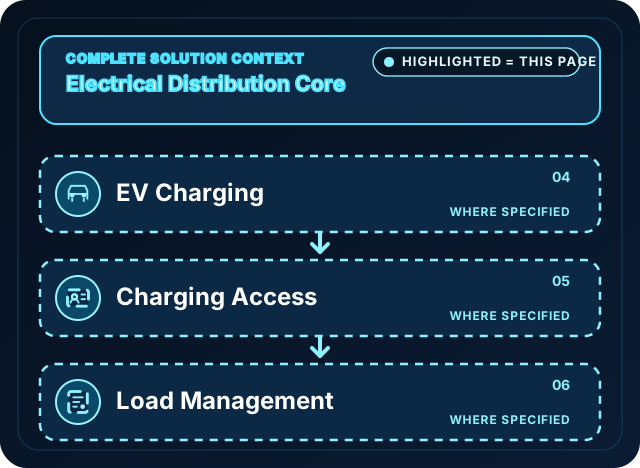
EV Charging

EV Charger Installation in Kuching, Sarawak

Home and commercial EV charger installation, wired in properly by technicians who assess your electrical supply first — not just a box mounted on a wall.

What It Is

More Than Mounting a Box

EV charger installation isn't just fixing a charging unit to a wall — it's an electrical job first. We assess your property's existing supply, DB box capacity and cable routing before recommending a charger, so you don't end up with a unit that trips your main breaker or can't actually deliver its rated charging speed.

  • Electrical load assessment before charger selection
  • Wall-box (AC) charger installation and wiring
  • DB box upgrade where the existing supply needs it

Who Needs This

  • Homeowners who've bought or are considering an EV
  • Offices and commercial buildings adding charging for staff or visitors
  • Condo management considering shared charging points
Ask About EV Charger Installation
Charger Types

Wall-Box vs. DC Fast Charging

Almost every home and small commercial installation uses a wall-box (AC) charger — DC fast charging is a different scale of project entirely.

Wall-Box (AC) Charger

The standard choice for homes and offices. Charges over several hours — typically overnight for a home, or during the working day at an office. Moderate electrical supply requirements.

DC Fast Charger

Charges much faster but demands significantly more electrical capacity — this is commercial/public-charging-station territory, not a typical home install.

Shared/Multi-Unit Charging

For condos and commercial car parks wanting several charging bays, we plan load-sharing between units so the building's total supply isn't overwhelmed.

Our Approach

Electrical Assessment Comes First

Before recommending a charger, we check your existing DB box capacity, supply phase (single or three-phase) and the cable route from your DB box to the parking spot. If your current supply can't safely support the charger you want, we'll tell you plainly and quote for the DB box upgrade needed — rather than installing a charger that underperforms or trips your breaker under real-world use.

What We Check

  • DB box spare capacity and breaker rating
  • Single-phase vs. three-phase supply
  • Cable route length and routing options
  • Weatherproofing for outdoor-mounted units
How It Works

Installation Process

01

Free Site Survey

We check your DB box, supply phase and cable route.

02

Load Assessment

Confirm whether your existing supply supports your chosen charger, or if an upgrade is needed.

03

Charger & Wiring Installation

Charger mounted and wired by our own technicians, with weatherproofing for outdoor locations.

04

Testing

Full electrical safety test and charging test before handover.

05

Handover

Walkthrough of the charger's controls and any app connectivity.

After Installation: Keep It Working

Like any electrical equipment, chargers benefit from periodic checks — especially outdoor-mounted units exposed to Sarawak's weather. Our maintenance (AMC) plans can include EV charger checks alongside your other systems.

FAQ

EV Charger Questions

Can my home's existing electrical supply handle an EV charger?
This depends on your existing DB box capacity and supply phase. We assess your electrical supply during the site survey and advise honestly if an upgrade is needed before installing the charger.
What's the difference between a wall-box charger and a DC fast charger?
A wall-box (AC) charger is what most homes and offices install — it charges overnight or during the day at a moderate rate. A DC fast charger delivers much faster charging but needs significantly more electrical capacity and is typically used for commercial or public charging points rather than a single home.
Do I need council or utility approval to install an EV charger?
Requirements vary by property type and load. We handle the electrical installation professionally and will advise if your specific situation needs additional approval or notification.
How long does EV charger installation take?
A straightforward home wall-box installation with adequate existing supply can often be completed within a day. Installations requiring a DB box upgrade or longer cable runs take longer — confirmed after the site survey.
Can multiple EV chargers share one property's electrical supply?
Yes, with proper load management — this is common for condos and commercial car parks. We plan load-sharing between charging points so the building's total electrical capacity isn't exceeded when multiple vehicles charge at once.

Ready to Charge at Home?

Book a free site survey and get an honest electrical assessment before you commit to a charger.

WhatsApp Us