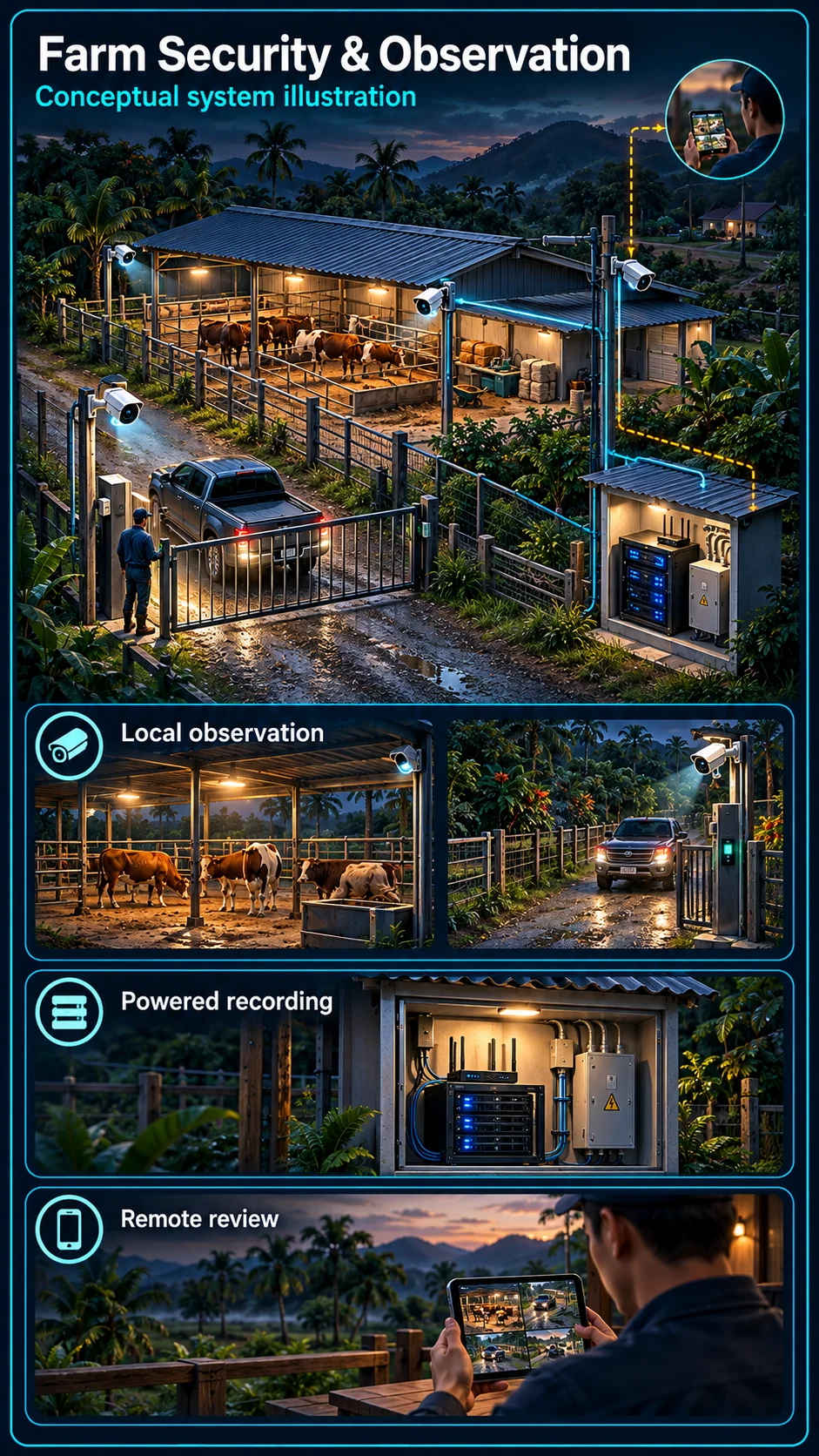
Gates, boundaries and working areas
Identify useful views of agreed gates, sheds and access points. Test people, livestock and moving vegetation by day and at night; detection is not assumed to ignore every animal.
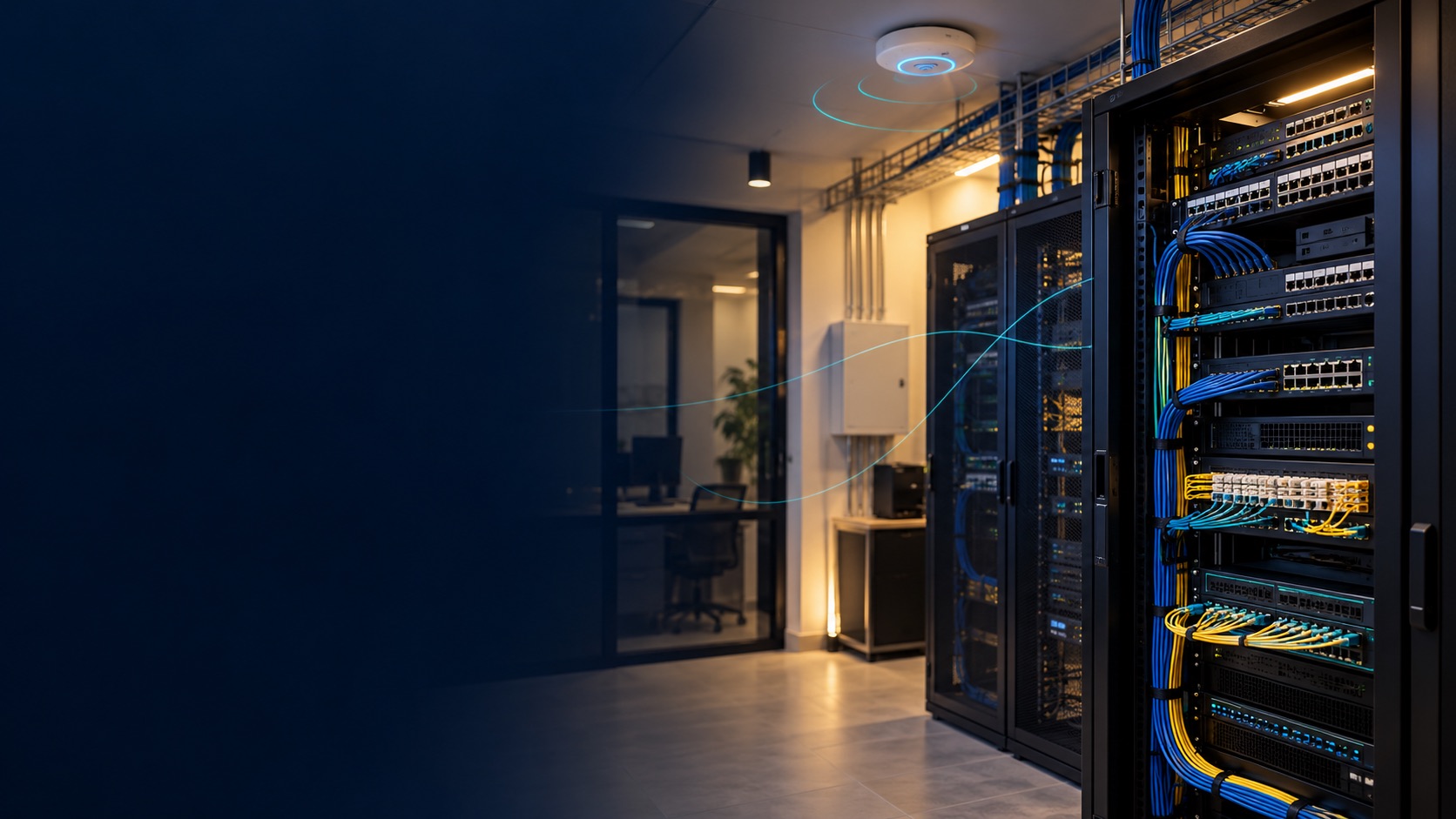
Farm security is a connectivity problem first: no fiber, weak mobile signal, long perimeters, and the owner living an hour away. Solve the internet, and the cameras, alarms and fence monitoring all come alive.
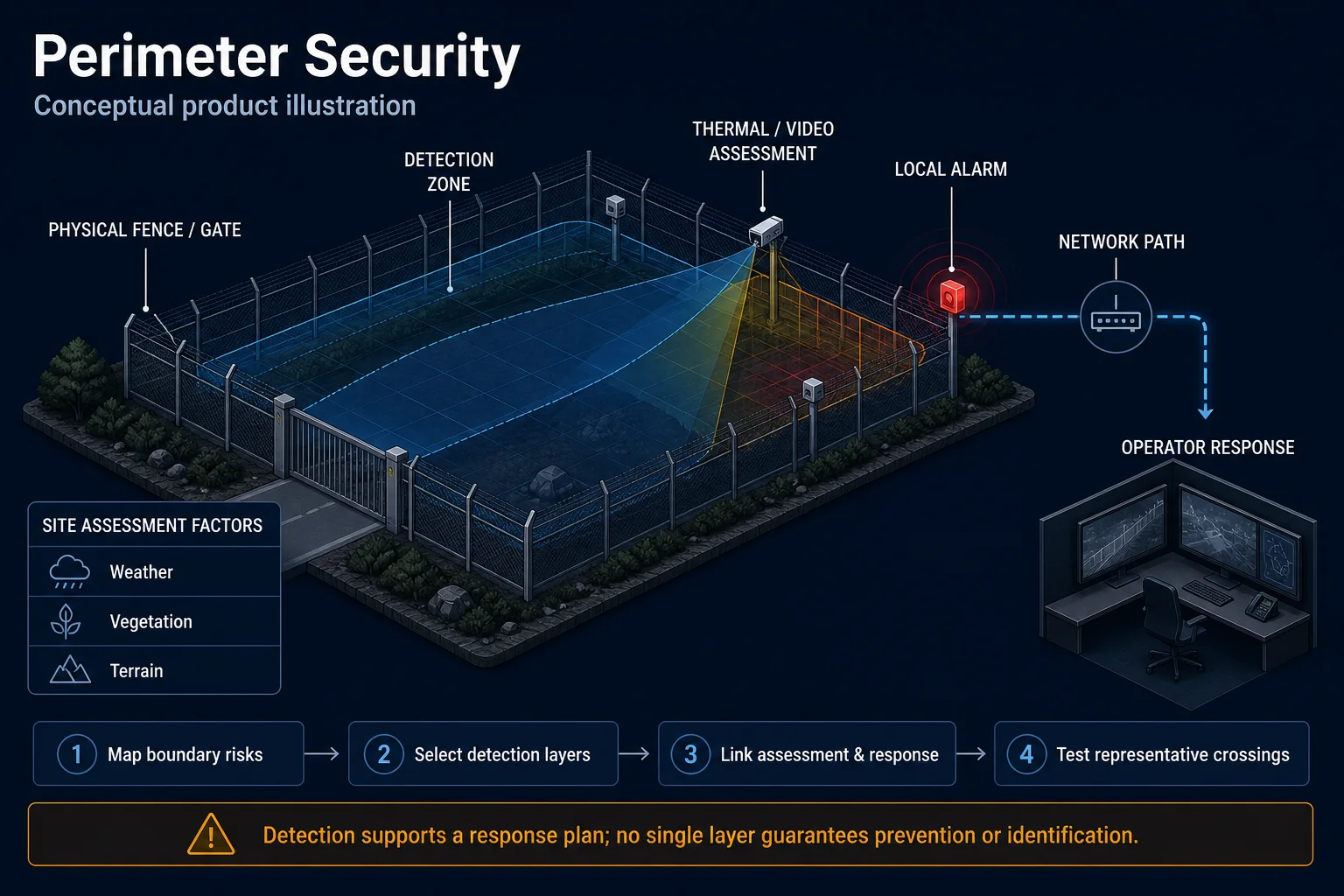
Industry solution
Farm observation and personnel warnings are different tasks. Animals, vegetation, distance, local storage, power and the available backhaul all affect what the remote operator can use.
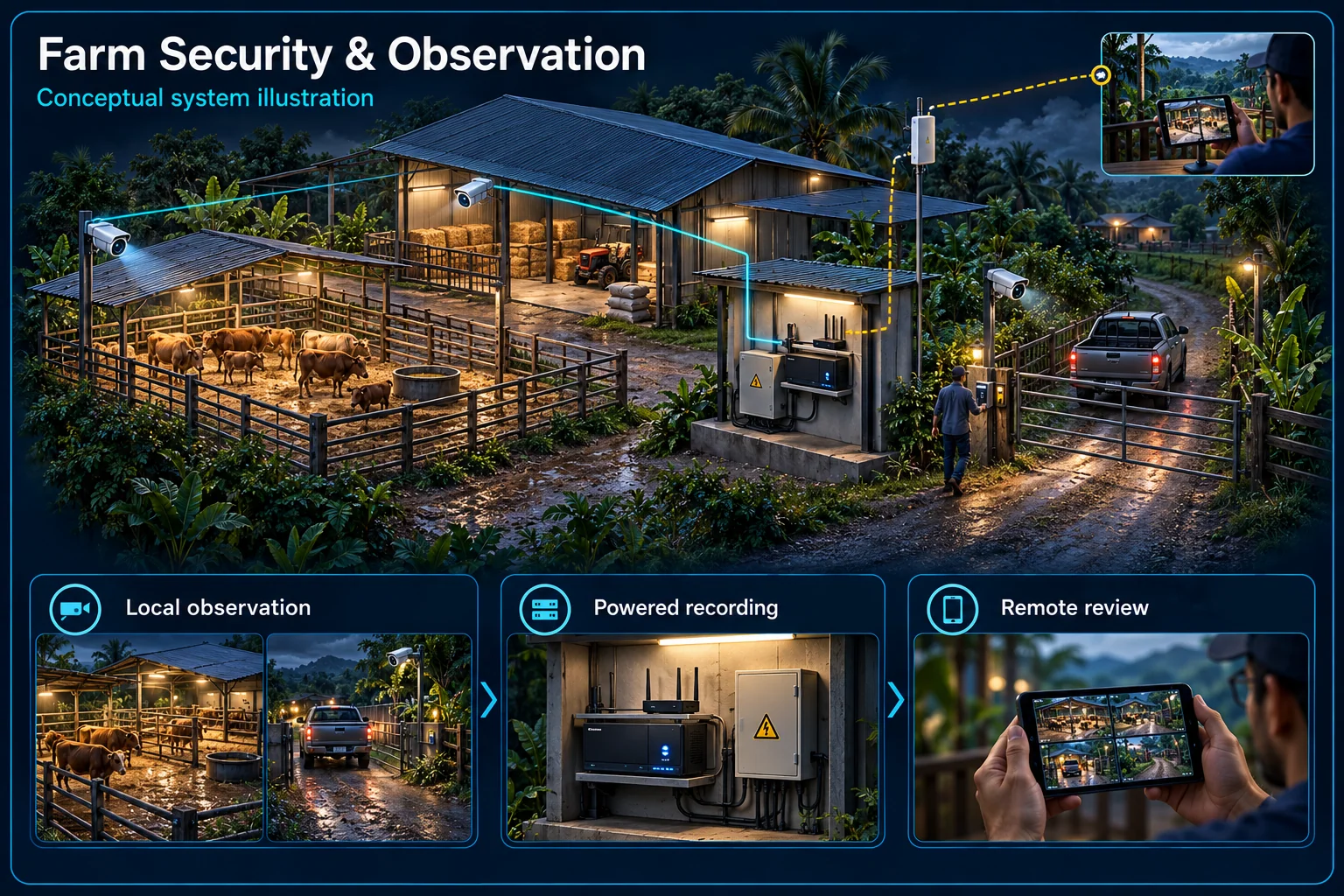
The remote link is shown separately from local recording and the rules for people.
Observation task
People-related rule
Powered equipment
Remote access dependency
Named response contact
A view intended to observe livestock may need different recording and warning rules from a staff entrance. Describe the actual target and route instead of assuming all animal activity should be ignored.
Check changing foliage, lighting and weather exposure when agreeing the location and test. The real view and selected equipment determine which rules can be accepted.
Confirm what records locally, which loads require power and how faults are noticed. An internet interruption and a loss of local power need different recovery actions.
Choose a feasible communication path for the location and confirm the provider boundary. Name who checks a notification and what they can realistically do from another location.
It may support different tasks only where the chosen equipment and rules allow them. Confirm each target and response separately and test the actual conditions.
That depends on the local recording design and power. A functioning local recorder may operate without internet, while remote viewing and notifications can stop.
CCTV scene planning · Farm, agriculture & remote site
Farm CCTV in Sarawak needs a site-specific view of distance, vegetation, animal movement, available power and the person who can respond.
Identify useful views of agreed gates, sheds and access points. Test people, livestock and moving vegetation by day and at night; detection is not assumed to ignore every animal.
Agree when staff or livestock movement is expected and which areas may use a warning rule. Nominate the contact who checks an event and the action they are authorised to take.
Test internet loss separately from a power cut. Confirm any solar or backup-power scope against the actual load, and demonstrate recording, notification limits and the supported response before acceptance.
There is no blanket guarantee. Confirm the exact equipment, mounting and rules, then test representative people, animals, lighting and weather conditions at the agreed site.
No. Remote access depends on site power, the local network and the internet service. Confirm what can operate locally, what stops during a fault and who can respond when remote access is unavailable.
The assessed scope, selected equipment and agreed acceptance test determine the final configuration.
Cameras that record locally but can't be viewed remotely are diaries, not security — and most farms have no fixed line at all.
Livestock, harvested produce, diesel and equipment vanishing overnight with kilometres of unwatched boundary.
Fence lines that would take an hour to walk — physically impossible to watch without detection built into the fence itself.
Incidents discovered the next morning, long after intervention was possible — response time is everything on remote sites.
Generator schedules and unstable supply killing recorders and routers exactly when coverage matters most.
Feed stores, chemical stores and equipment sheds spread across the site with no access record at all.
Every farm design starts with the same question: how does the signal get out? Once Starlink or long-range wireless solves that, the rest of the package becomes genuinely useful instead of theoretical.
A planning scenario may begin with an event at an agreed boundary. Where compatible equipment, power and communications support it, HJ can review notification, camera viewing and on-site warning options. Confirm the responsible contact, fault behaviour and exact operating sequence during a site test; a phone alert, live view or remote siren is not an automatic response promise.
Sarawak heat, humidity and storms — housings, mounts and surge protection specified for exposed rural installation, not office conditions.
Far corners without power runs can host solar-assisted camera and fence-energiser points — coverage without trenching cable for kilometres.
Start with the entrance, stores and the worst boundary; extend zones season by season as budget allows — the design anticipates the growth.
Suitability depends on the site, dish location, power, local network and service conditions. HJ can assess the connection and test the agreed viewing or notification workflow; continuous availability is not guaranteed.
Section reporting depends on the energiser or controller, the circuit layout and any monitoring interface. Confirm the supported zones and demonstrate the actual alert and local checking procedure before relying on section identification.
Send us your location pin and main concerns — we'll plan the connectivity and coverage together.
An industry outcome may combine several systems. Use these diagrams to understand each system boundary, then confirm the functions and quantities required for the actual site.

Connects camera capture, transmission, recording, retention, authorised viewing and selected response functions as one commissioned CCTV system.
Planning connection: Identify remote access points and observation areas, then check available mounting, power and recording options. Distance, vegetation and site conditions must be assessed; the diagram does not establish a camera model or uninterrupted remote viewing.
Open component 01 in the complete Solution →
Connects selected detectors, panel logic, user controls, local warning, communication and optional visual verification.
Planning connection: Select the farm's actual boundary or alert needs and define what happens when an event is reported. Outdoor, panic or environmental inputs are separately agreed options, not a promise that every detector type is included.
Open component 03 in the complete Solution →
Defines the shared infrastructure and separate service boundaries for network, WiFi, SIP telephony and TV media distribution.
Planning connection: Check the remote site's available service and local network path before planning online access. Starlink or other provider service, account ownership and availability remain separate from HJ's agreed mounting, cabling and network work.
Open component 03 in the complete Solution →