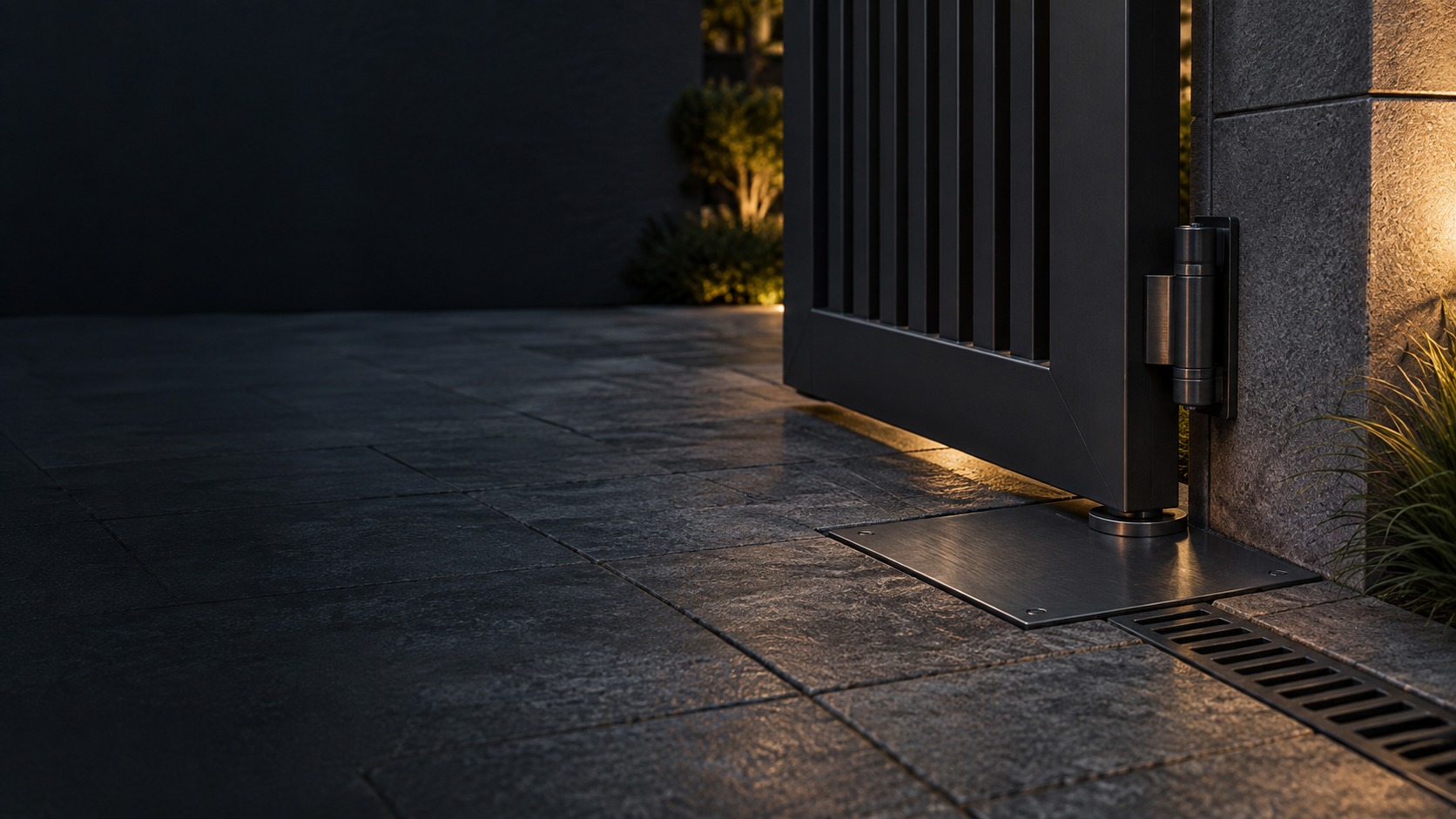
Swing-gate lower pivot and closed foundation-box lid (illustration)

Arm & Underground Swing Gate in Kuching & Sarawak

Compare an above-ground arm operator with an underground swing-gate installation around the real hinge geometry, leaf weight and ground conditions. HJ checks foundation space, drainage, maintenance access and the authorised release provision before defining the motor and safety scope.

System selection and integration guideAutogate
Swing GateArm & Underground Swing Gate
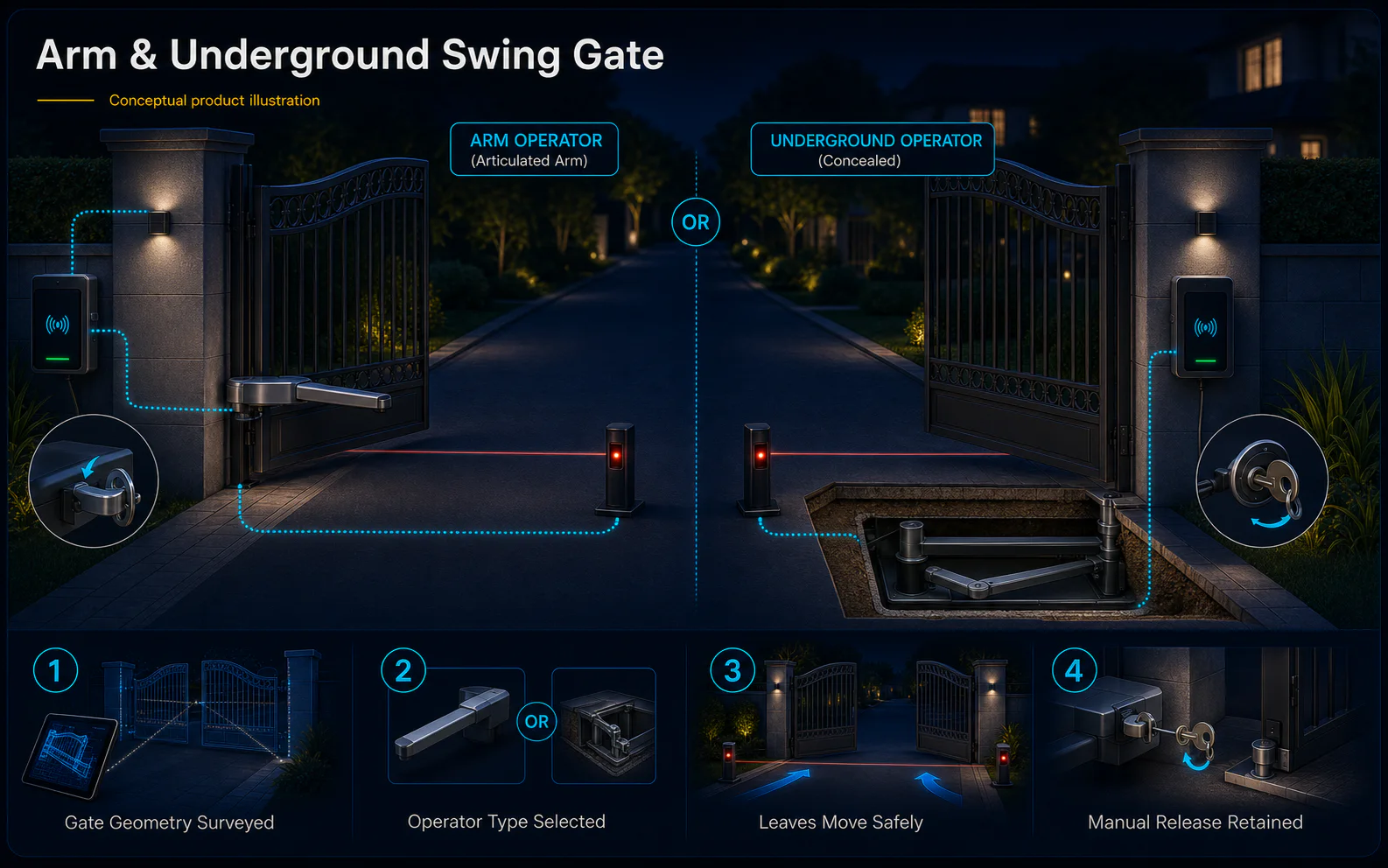
Arm and Underground Swing Gate system diagram
  1. 01Arm & Underground Swing Gate
  2. 02Gate geometry, motor duty and safety
  3. 03Gate, lane or parking interface
  4. 04repeated full-travel cycles
Conceptual Arm & Underground Swing Gate product and system illustration.
Illustration & scope boundary

Conceptual Arm & Underground Swing Gate product and system illustration for Swing Gate. Final device form, model, interfaces and quantities are confirmed from the assessed scope and approved product data. Conceptual vehicle journey and lane safety for Arm & Underground Swing Gate, derived from this page's scope, interfaces and acceptance record.

Conceptual planning path — not an as-built drawing or project photograph.

What Arm & Underground Swing Gate covers

Compare an above-ground arm operator with an underground swing-gate installation around the real hinge geometry, leaf weight and ground conditions. HJ checks foundation space, drainage, maintenance access and the authorised release provision before defining the motor and safety scope.

It sits in Autogate under Swing Gate. The final deliverable is shaped by the intended outcome, the installed or proposed environment and the interfaces that must be owned, supplied, integrated and tested.

When to use this page

Leaf dimensions and weight, hinge/pillar geometry, opening arc, ground levels, runoff/drainage, foundation access, power and exact operator model.
Typical environments to assess

  • Swing gates with assessed foundation space and ground conditions.
  • Concealed-operator entrances with designed drainage and maintenance access.
  • Sites requiring model-specific service and release provision.

Engineering SOP & Handover Checklist

From the initial brief to the handover record: what to prepare, check and confirm with HJ.

01

Operational Purpose & Workflow

Compare an above-ground arm operator with an underground swing-gate installation around the real hinge geometry, leaf weight and ground conditions. HJ checks foundation space, drainage, maintenance access and the authorised release provision before defining the motor and safety scope.

02

Pre-Attendance Evidence

Leaf dimensions and weight, hinge/pillar geometry, opening arc, ground levels, runoff/drainage, foundation access, power and exact operator model.

03

Diagnostic & Testing Path

Confirm the exact motor/controller, mechanical travel, supported protection, power and authorised opening inputs together. Smart modules and credential readers need compatible interfaces and an identified administrator; an opening command is not proof that the gate is safe.

04

System & Responsibility Boundary

Test agreed normal travel, protective-device response and authorised release with responsible parties in a safe work window. Document power/network effects and the safe temporary procedure; do not bypass protection or publish release/bypass instructions.

05

Acceptance & Handover Record

Record the gate and equipment labels, mechanical condition, supported inputs, owner/admin handover, witnessed results, unresolved limits and approved follow-up. Parts, civil work, visit frequency and response arrangements are agreed separately.

Engineering Scope, Regulatory & Service Boundaries

Responsibility and evidence boundary

HJ coordinates assessment, engineering, installation, integration, testing and lifecycle support only for the scope recorded in the quotation. ISD handles catalogue, model, datasheet, supply and availability enquiries. Customer, consultant, builder and appointed-specialist responsibilities remain explicit.

Final scope, quantities, compatibility, access, programme, availability and responsibility are confirmed during assessment and quotation.

This focused topic remains connected to its complete system owner. Final models, quantities, interfaces and included work are confirmed in the assessed quotation.

Questions before proceeding

Use the answers as a planning boundary; site conditions and written scope remain decisive.

Does a concealed motor remove the need for drainage?

No. An underground foundation box still needs an appropriate drainage and maintenance arrangement. Confirm runoff, ground levels, access and the exact operator instructions; a product enclosure rating is not permission to leave the box waterlogged.

Which connected functions need separate confirmation?

Confirm the exact motor/controller, mechanical travel, supported protection, power and authorised opening inputs together. Smart modules and credential readers need compatible interfaces and an identified administrator; an opening command is not proof that the gate is safe.

What should be tested and recorded for this scope?

Test agreed normal travel, protective-device response and authorised release with responsible parties in a safe work window. Document power/network effects and the safe temporary procedure; do not bypass protection or publish release/bypass instructions. Record the gate and equipment labels, mechanical condition, supported inputs, owner/admin handover, witnessed results, unresolved limits and approved follow-up. Parts, civil work, visit frequency and response arrangements are agreed separately.

Planning Arm & Underground Swing Gate? Tell HJ about your site

Tell us where it will be used, what it needs to do and what equipment you already have. HJ will recommend the right system, explain who is responsible for what, and agree the next step with you.