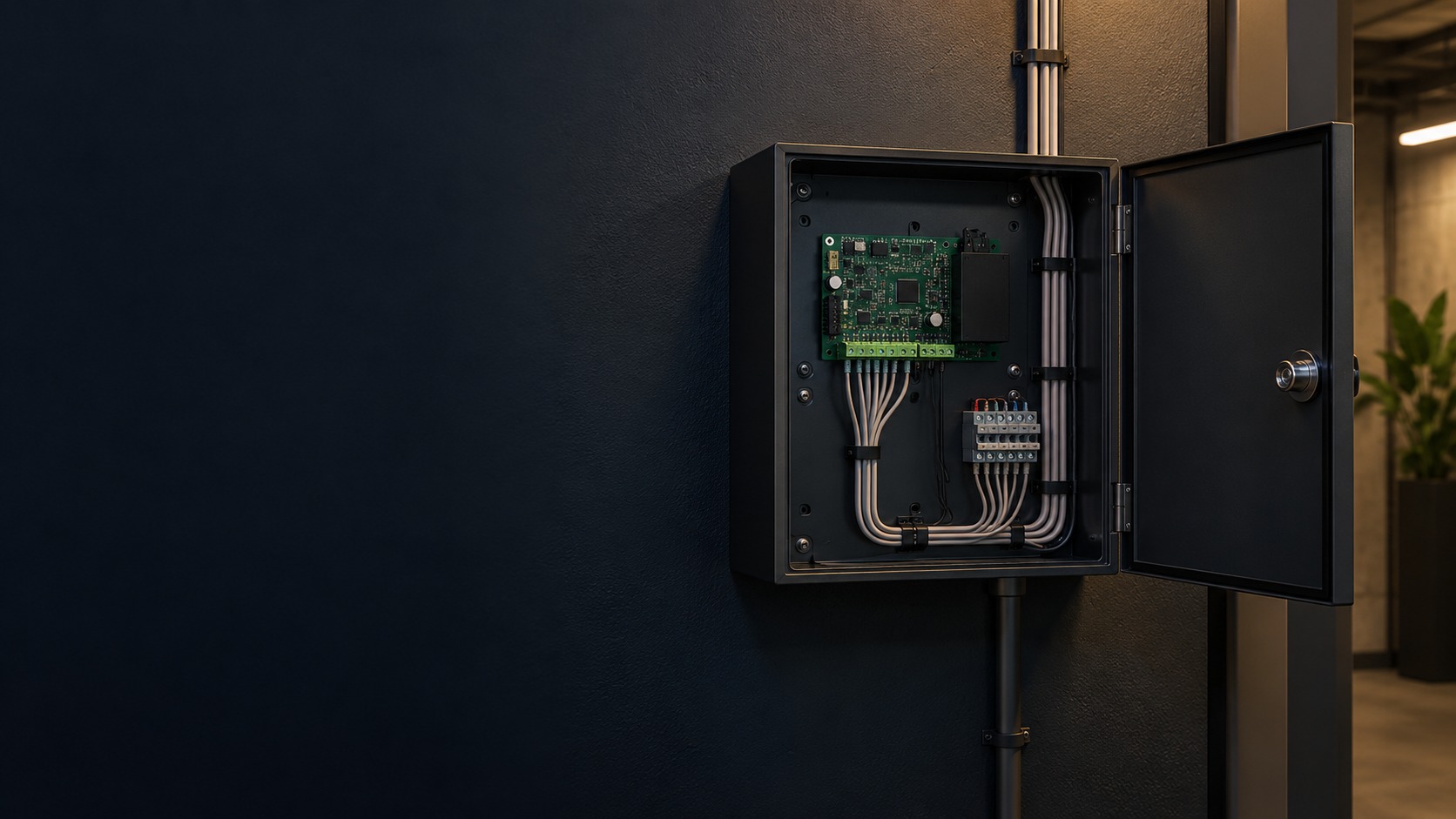
Low-voltage access-control enclosure and signal wiring (illustration)

Single & Multi-Door Access in Kuching & Sarawak

Choose standalone or controller-based access around the number of controlled openings and the way permissions are managed. HJ maps readers, locks, contacts, exit devices and power per door, then checks shared rules and any supported interlock or anti-passback separately.

System selection and integration guideDoor Access / Access Control
Access ControlSingle & Multi-Door Access
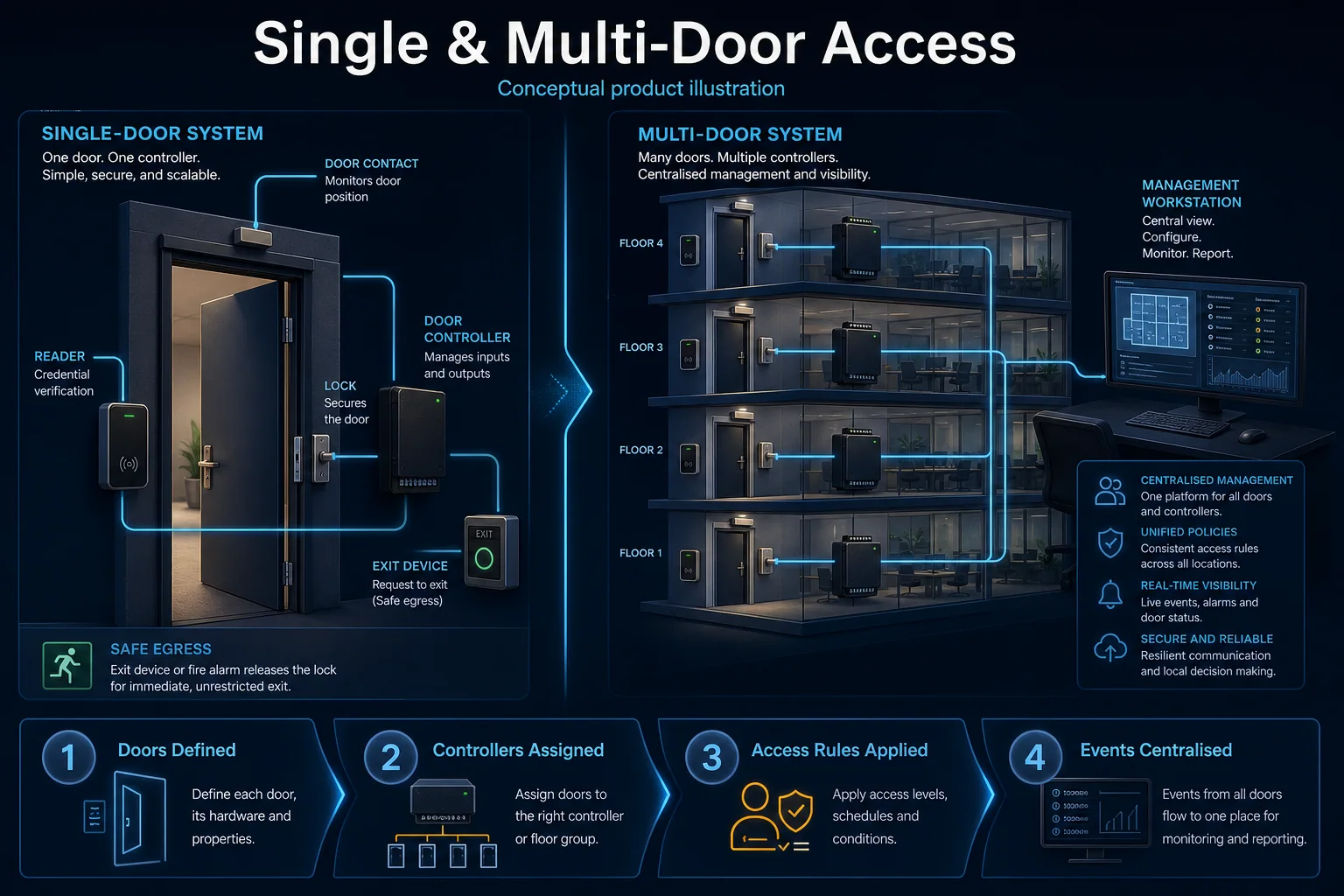
Single and Multi-Door Access system diagram
  1. 01Single & Multi-Door Access
  2. 02Credential, door hardware and safe release
  3. 03Door, lane or workflow interface
  4. 04grant and deny by group and time
Conceptual Single & Multi-Door Access product and system illustration.
Illustration & scope boundary

Conceptual Single & Multi-Door Access product and system illustration for Access Control. Final device form, model, interfaces and quantities are confirmed from the assessed scope and approved product data. Conceptual identity and permission path for Single & Multi-Door Access, derived from this page's scope, interfaces and acceptance record.

Conceptual planning path — not an as-built drawing or project photograph.

What Single & Multi-Door Access covers

Choose standalone or controller-based access around the number of controlled openings and the way permissions are managed. HJ maps readers, locks, contacts, exit devices and power per door, then checks shared rules and any supported interlock or anti-passback separately.

It sits in Door Access / Access Control under Access Control. The final deliverable is shaped by the intended outcome, the installed or proposed environment and the interfaces that must be owned, supplied, integrated and tested.

When to use this page

Door count and direction, reader/controller architecture, cable and power routes, user groups, shared rules, platform capacity and per-opening exit requirements.
Typical environments to assess

  • Several doors with centrally managed permission groups.
  • Networked sites with documented local/offline dependencies.
  • Installed platforms requiring authorised, recoverable upgrades.

Engineering SOP & Handover Checklist

From the initial brief to the handover record: what to prepare, check and confirm with HJ.

01

Operational Purpose & Workflow

Choose standalone or controller-based access around the number of controlled openings and the way permissions are managed. HJ maps readers, locks, contacts, exit devices and power per door, then checks shared rules and any supported interlock or anti-passback separately.

02

Pre-Attendance Evidence

Door count and direction, reader/controller architecture, cable and power routes, user groups, shared rules, platform capacity and per-opening exit requirements.

03

Diagnostic & Testing Path

Confirm the reader or terminal decision path, controller protocol, lock output, door contact, exit devices, power and supported software. Attendance, intercom or alarm links require a documented interface and responsible owner; a working credential does not prove the complete door is safe.

04

System & Responsibility Boundary

Test valid and denied entry, ordinary exit and the approved emergency release with responsible parties. Network loss, power loss and backup affect different components; document the actual installed behaviour without assuming fail-safe means every escape requirement is satisfied.

05

Acceptance & Handover Record

Record opening IDs, device/firmware labels, credentials and user groups, permitted schedules, administrative ownership, power/release dependencies, acceptance results and unresolved limits. Keep personal data, retention, revocation and later changes under the owner policy.

Engineering Scope, Regulatory & Service Boundaries

Responsibility and evidence boundary

HJ coordinates assessment, engineering, installation, integration, testing and lifecycle support only for the scope recorded in the quotation. ISD handles catalogue, model, datasheet, supply and availability enquiries. Customer, consultant, builder and appointed-specialist responsibilities remain explicit.

Identity, image, credential and movement data require an authorised controller, lawful access, proportionate collection, retention rules and recorded administrator responsibility.

This focused topic remains connected to its complete system owner. Final models, quantities, interfaces and included work are confirmed in the assessed quotation.

Questions before proceeding

Use the answers as a planning boundary; site conditions and written scope remain decisive.

Can one controller handle every door?

Controller capacity, reader channels, outputs, credential count and rule support depend on the model. Map each opening and power path. Multi-door interlock or anti-passback requires suitable devices, defined rules and a verified exception procedure.

Which interfaces need confirmation for this scope?

Confirm the reader or terminal decision path, controller protocol, lock output, door contact, exit devices, power and supported software. Attendance, intercom or alarm links require a documented interface and responsible owner; a working credential does not prove the complete door is safe.

What should be verified and recorded at handover?

Test valid and denied entry, ordinary exit and the approved emergency release with responsible parties. Network loss, power loss and backup affect different components; document the actual installed behaviour without assuming fail-safe means every escape requirement is satisfied. Record opening IDs, device/firmware labels, credentials and user groups, permitted schedules, administrative ownership, power/release dependencies, acceptance results and unresolved limits. Keep personal data, retention, revocation and later changes under the owner policy.

Planning Single & Multi-Door Access? Tell HJ about your site

Tell us where it will be used, what it needs to do and what equipment you already have. HJ will recommend the right system, explain who is responsible for what, and agree the next step with you.