Operational purpose
OTDR / Power Testing in Kuching uses the testing / inspection workflow for Fiber. Finds and restores optical loss or discontinuity through route inspection, cleaning, measured testing, splicing and termination.
Backbone maintenance, connector replacement, re-splicing and troubleshooting. This page focuses on Fiber within Fiber Optic Service, with site inputs, interfaces, verification and responsibility kept visible.
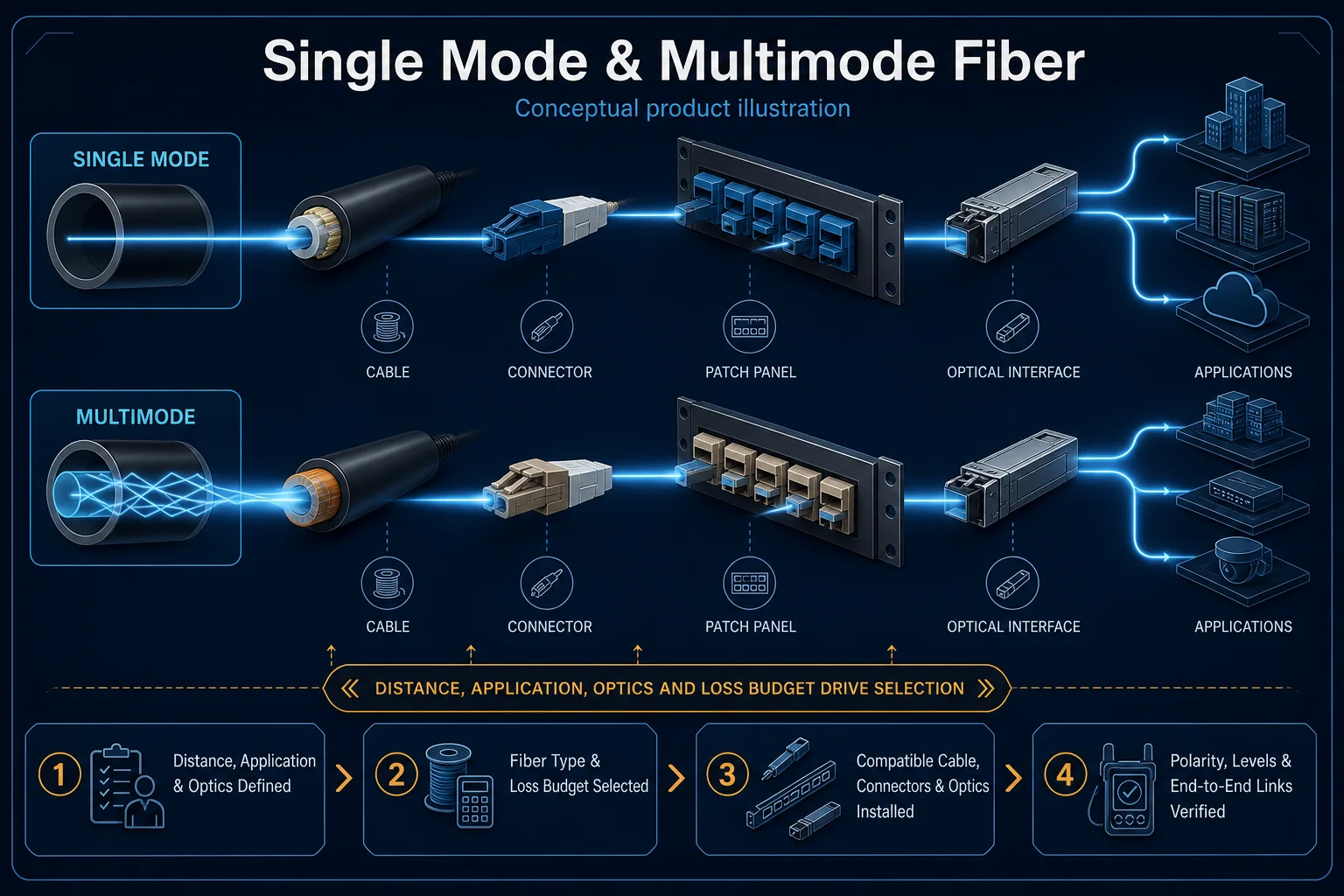
Conceptual planning path — not an as-built drawing or project photograph.
Backbone maintenance, connector replacement, re-splicing and troubleshooting.
It sits in Fiber Optic Service under Fiber. The final deliverable is shaped by the intended outcome, the installed or proposed environment and the interfaces that must be owned, supplied, integrated and tested.
Use OTDR / Power Testing in Kuching when the installed system needs a testing / inspection workflow focused on Fiber, rather than a generic call-out. The work record checks endpoint, core and port schedule, last-known levels and exact outage, route, fiber, connector, optic, access and spare-core plan, applies test purpose and acceptance value → safe isolation or operating window → instrument or system evidence → signed result and exception list, and closes with cleanliness, continuity and polarity, before and after power level, OTDR, end-to-end link and updated core record. This separates OTDR / Power Testing in Kuching from other Fiber Optic Service tasks that may touch the same equipment but require a different method and close-out record.
Use these four records to keep OTDR / Power Testing in Kuching distinct from adjacent systems or service tasks.
OTDR / Power Testing in Kuching uses the testing / inspection workflow for Fiber. Finds and restores optical loss or discontinuity through route inspection, cleaning, measured testing, splicing and termination.
For OTDR / Power Testing in Kuching, record endpoint, core and port schedule, last-known levels and exact outage, route, fiber, connector, optic, access and spare-core plan; add topology, capacity, routes, optical or copper budget, PoE, addressing, segmentation, credentials and outage ownership.
OTDR events require interpretation and route access; replacing connectors or re-splicing cannot repair inaccessible crushed or water-damaged cable. Carrier, RF, cabling, switching, routing and application performance are different domains and cannot be accepted from a single online indicator.
Follow test purpose and acceptance value → safe isolation or operating window → instrument or system evidence → signed result and exception list and close with cleanliness, continuity and polarity, before and after power level, OTDR, end-to-end link and updated core record; retain link or optical results, coverage or throughput samples, configuration backup, labels, port or core schedules and demarcation records.
These checkpoints make this page specific to OTDR / Power Testing in Kuching rather than a generic keyword page.
OTDR / Power Testing in Kuching focuses on Fiber and follows test purpose and acceptance value → safe isolation or operating window → instrument or system evidence → signed result and exception list. Inspects and measures an installed system against explicit criteria without assuming that online status equals acceptance.
For OTDR / Power Testing in Kuching, provide the reported symptom or objective, site contact, recent changes and endpoint, core and port schedule, last-known levels and exact outage, route, fiber, connector, optic, access and spare-core plan.
Trace Source & uplink → Core transport → Distribution edge → Managed endpoint for OTDR / Power Testing in Kuching without assuming the visible symptom identifies the root cause.
OTDR events require interpretation and route access; replacing connectors or re-splicing cannot repair inaccessible crushed or water-damaged cable. Repair, replacement, firmware, programming and parts remain subject to authority, compatibility, warranty, access and serviceability.
Close OTDR / Power Testing in Kuching with cleanliness, continuity and polarity, before and after power level, OTDR, end-to-end link and updated core record; record link, throughput or power test, addressing and segmentation record, label, route and handover schedule and list every restored, deferred and excluded item.
HJ coordinates assessment, engineering, installation, integration, testing and lifecycle support only for the scope recorded in the quotation. ISD handles catalogue, model, datasheet, supply and availability enquiries. Customer, consultant, builder and appointed-specialist responsibilities remain explicit.
Final scope, quantities, compatibility, access, programme, availability and responsibility are confirmed during assessment and quotation.
Installed platform, authorised ownership, parts compatibility and serviceability are checked before any repair or restoration outcome is proposed.
Use these routes to move from this focused record into the complete system, site, capability and aftercare journey.
Use the answers as a planning boundary; site conditions and written scope remain decisive.
For this Fiber task, share the symptom or objective, recent changes, authorised access and endpoint, core and port schedule, last-known levels and exact outage, route, fiber, connector, optic, access and spare-core plan.
OTDR events require interpretation and route access; replacing connectors or re-splicing cannot repair inaccessible crushed or water-damaged cable. HJ confirms the practical corrective route only after inspection or diagnosis.
The close-out records cleanliness, continuity and polarity, before and after power level, OTDR, end-to-end link and updated core record, plus restored items, outstanding faults, approved changes and exclusions.
Share the site, intended outcome, existing equipment and timing. HJ will confirm the correct system route, responsibility boundary and next step.