
Manual Call Point in Kuching & Sarawak

Detection, notification, fireman communication, interface and maintenance scope. This page focuses on Detection & Notification within Fire Alarm, with site inputs, interfaces, verification and responsibility kept visible.

System selection and integration guideFire Alarm
Detection & NotificationManual Call Point
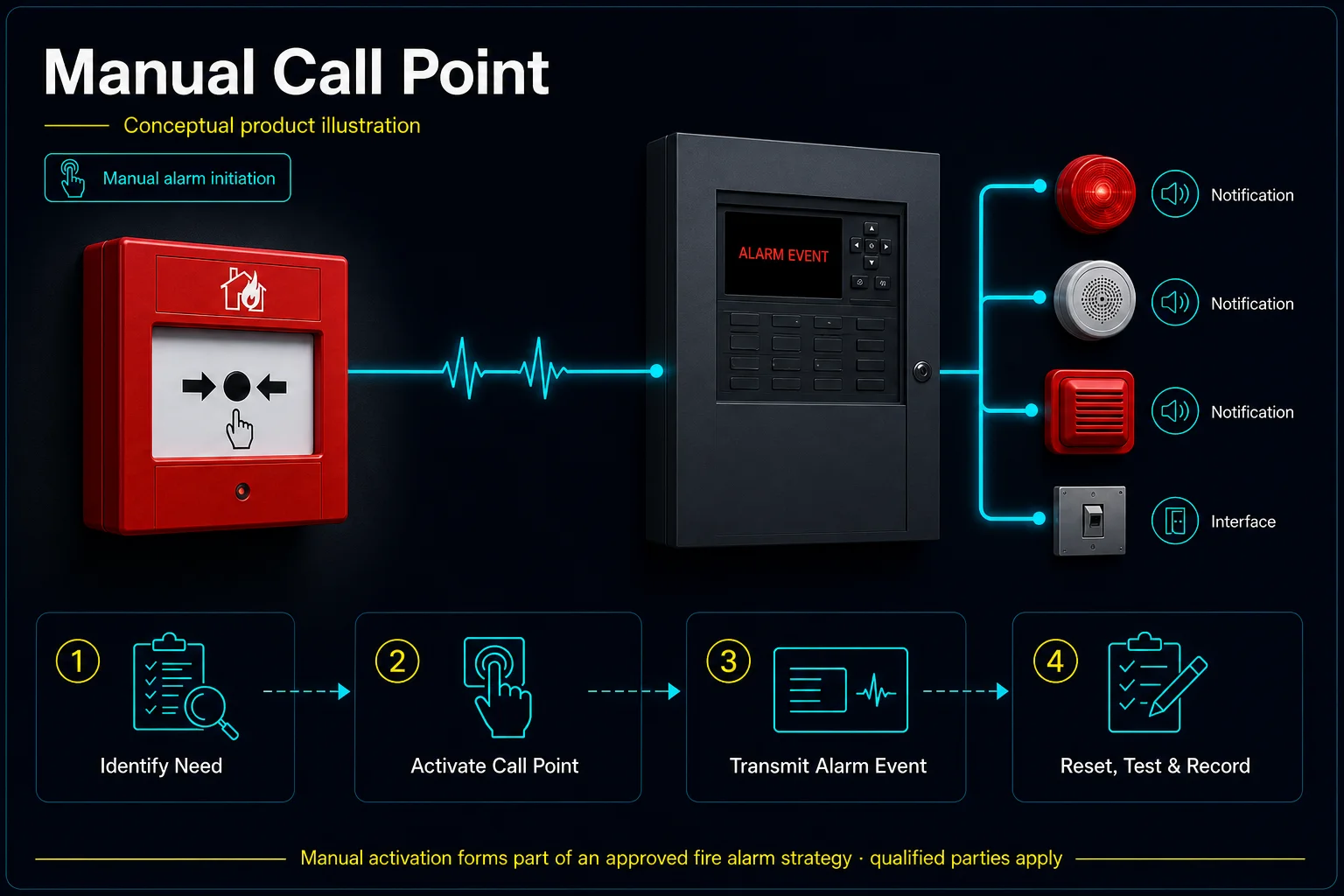
Conceptual Manual Call Point canvas showing manual alarm initiation, a generic alarm-event panel, notification and interface paths, followed by authorised reset, testing and records.
  1. 01Manual Call Point
  2. 02Life-safety interfaces and approvals
  3. 03Warning interface
  4. 04device and circuit alarm or fault tests
Conceptual Manual Call Point product and system illustration.
Illustration & scope boundary

Conceptual Manual Call Point product and system illustration for Detection & Notification. Final device form, model, interfaces and quantities are confirmed from the assessed scope and approved product data. Conceptual monitored life-safety path for Manual Call Point, derived from this page's scope, interfaces and acceptance record.

Conceptual planning path — not an as-built drawing or project photograph.

What Manual Call Point covers

Detection, notification, fireman communication, interface and maintenance scope.

It sits in Fire Alarm under Detection & Notification. The final deliverable is shaped by the intended outcome, the installed or proposed environment and the interfaces that must be owned, supplied, integrated and tested.

When to use this page

Use this page when Manual Call Point is the specific system decision, not merely one line inside a wider Fire Alarm quotation. Its exact focus is Detection & Notification. Assessment records approved fire strategy and category, zones, loops, devices and panel capacity, cause-and-effect, drawings, qualified persons and approval route and closes with device and circuit alarm or fault tests, witnessed cause-and-effect, power, battery, event log and signed records. Adjacent Fire Alarm options may share infrastructure while requiring different capacity, interfaces, operating rules or evidence, so the selection and handover result remain independently reviewable.

Typical environments to assess

  • Commercial premises
  • Industrial or institutional sites
  • Residential or mixed-use sites
  • New build and retrofit projects
fire life safety

Field decision dossier

Use these four records to keep Manual Call Point distinct from adjacent systems or service tasks.

01

Operational purpose

Manual Call Point focuses on Detection & Notification. Detects approved fire conditions, executes cause-and-effect outputs and records warning or fault states within a regulated fire strategy.

02

Site evidence to collect

For Manual Call Point, record approved fire strategy and category, zones, loops, devices and panel capacity, cause-and-effect, drawings, qualified persons and approval route; add approved drawings, device or circuit schedules, cause-and-effect, duration, interfaces, impairment plan and authority or specialist responsibilities.

03

Primary failure boundary

Fire detection, firefighting, voice alarm and emergency lighting are separate regulated scopes; design, testing and changes require applicable qualified parties and approvals. Fire alarm, firefighting, voice alarm and emergency lighting are distinct regulated scopes; visual operation is not certification or approval.

04

Acceptance record

Accept Manual Call Point with device and circuit alarm or fault tests, witnessed cause-and-effect, power, battery, event log and signed records; retain device and fault tests, authorised emergency scenarios, supply or duration evidence, logbook or drawings and signed regulated records.

Engineering and service decisions

These checkpoints make this page specific to Manual Call Point rather than a generic keyword page.

01

Manual Call Point outcome

Define Detection & Notification as the operating result for Manual Call Point, including the users, process and exceptions it must serve.

02

Site and design inputs

For Manual Call Point, confirm approved fire strategy and category, zones, loops, devices and panel capacity, cause-and-effect, drawings, qualified persons and approval route.

03

Integration path

Map Initiating device → Control & cause/effect → Warning interface → Authority-aligned record for Manual Call Point and identify every interface owned by HJ, the customer, ISD supply or an appointed specialist.

04

Selection constraint

Fire detection, firefighting, voice alarm and emergency lighting are separate regulated scopes; design, testing and changes require applicable qualified parties and approvals. Final models, capacities and quantities still follow survey, compatibility and availability.

05

Acceptance evidence

For Manual Call Point, record device and circuit alarm or fault tests, witnessed cause-and-effect, power, battery, event log and signed records; also agree device and circuit test, cause-and-effect verification, responsibility, approval and record review before handover.

Responsibility and evidence boundary

HJ coordinates assessment, engineering, installation, integration, testing and lifecycle support only for the scope recorded in the quotation. ISD handles catalogue, model, datasheet, supply and availability enquiries. Customer, consultant, builder and appointed-specialist responsibilities remain explicit.

Regulated or multi-discipline work proceeds only after site assessment and confirmation of the competent, qualified or appointed persons, approvals, safe isolation and responsibility required for that scope.

This focused topic remains connected to its complete system owner. Final models, quantities, interfaces and included work are confirmed in the assessed quotation.

Questions before proceeding

Use the answers as a planning boundary; site conditions and written scope remain decisive.

What should be decided about conventional versus addressable for the Detection & Notification topic Manual Call Point?

Manual Call Point focuses on Detection & Notification within Detection & Notification. Detects approved fire conditions, executes cause-and-effect outputs and records warning or fault states within a regulated fire strategy. The approved selection must respect this boundary: Fire detection, firefighting, voice alarm and emergency lighting are separate regulated scopes; design, testing and changes require applicable qualified parties and approvals.

Which site inputs and handover evidence shape Manual Call Point?

Confirm approved fire strategy and category, zones, loops, devices and panel capacity, cause-and-effect, drawings, qualified persons and approval route. Record device and circuit alarm or fault tests, witnessed cause-and-effect, power, battery, event log and signed records, then complete device and circuit test, cause-and-effect verification, responsibility, approval and record review against the approved scope.

Does this page mean the listed hardware is in stock?

No. HJ handles engineering, installation and integration. ISD handles product-family, model, datasheet, supply and availability enquiries separately.

Turn this focused topic into an assessed scope

Share the site, intended outcome, existing equipment and timing. HJ will confirm the correct system route, responsibility boundary and next step.