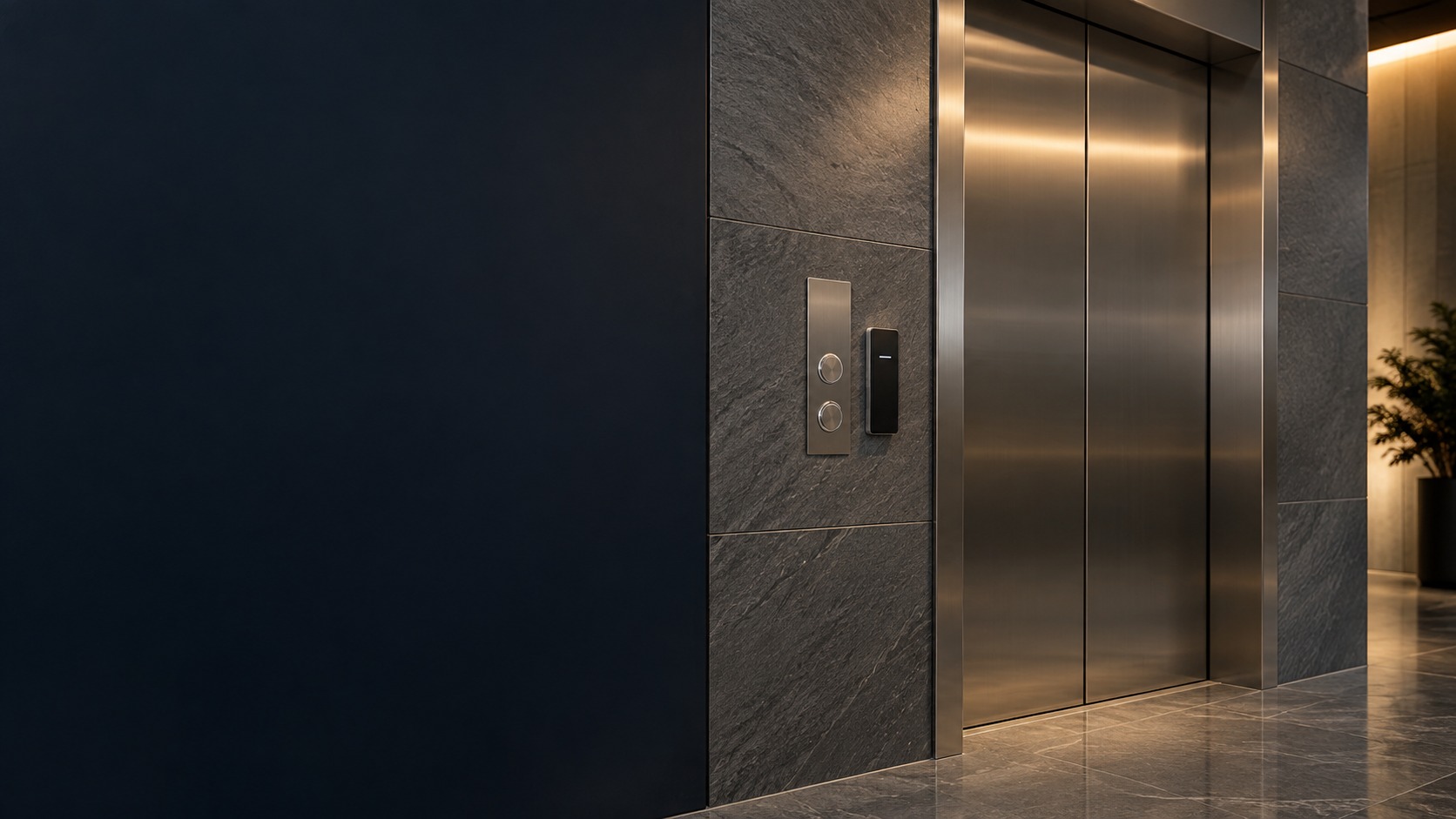
Credential reader and elevator lobby call panel – RFID / Face / QR Lift Access in Kuching & Sarawak (illustration)

RFID / Face / QR Lift Access in Kuching & Sarawak

Choose RFID, face or QR credentials for the permitted lift-floor workflow on confirmed equipment. HJ checks the reader or terminal, credential validity and floor mapping with the lift contractor; the credential method does not replace lift safety or emergency control.

System selection and integration guideLift Access
Lift / ElevatorRFID / Face / QR Lift Access
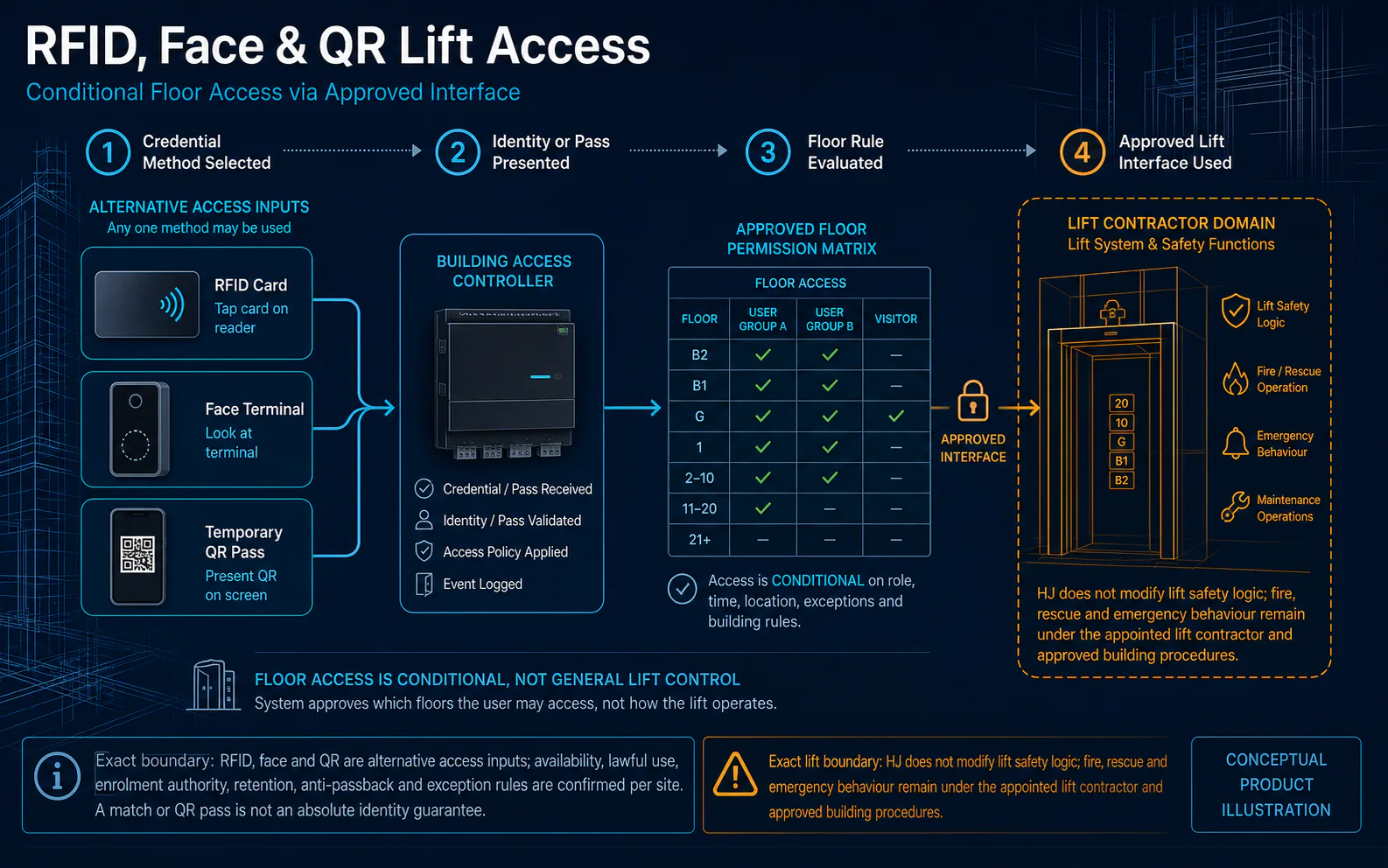
RFID, Face and QR Lift Access system diagram
  1. 01RFID / Face / QR Lift Access
  2. 02Credential, door hardware and safe release
  3. 03Door, lane or workflow interface
  4. 04allowed and denied floor selection
Conceptual RFID / Face / QR Lift Access product and system illustration.
Illustration & scope boundary

Conceptual RFID / Face / QR Lift Access product and system illustration for Lift / Elevator. Final device form, model, interfaces and quantities are confirmed from the assessed scope and approved product data. Conceptual identity and permission path for RFID / Face / QR Lift Access, derived from this page's scope, interfaces and acceptance record.

Conceptual planning path — not an as-built drawing or project photograph.

What RFID / Face / QR Lift Access covers

Choose RFID, face or QR credentials for the permitted lift-floor workflow on confirmed equipment. HJ checks the reader or terminal, credential validity and floor mapping with the lift contractor; the credential method does not replace lift safety or emergency control.

It sits in Lift Access under Lift / Elevator. The final deliverable is shaped by the intended outcome, the installed or proposed environment and the interfaces that must be owned, supplied, integrated and tested.

When to use this page

Reader/terminal and lift interface, supported card/face/QR methods, authorised floors, expiry rules, alternative credential and lift-contractor approval.
Typical environments to assess

  • Residential or office lifts with contractor-approved access interfaces.
  • Floor permission and temporary-visitor workflows with tested expiry.
  • Installed access controllers serviced separately from lift machinery.

Engineering SOP & Handover Checklist

From the initial brief to the handover record: what to prepare, check and confirm with HJ.

01

Operational Purpose & Workflow

Choose RFID, face or QR credentials for the permitted lift-floor workflow on confirmed equipment. HJ checks the reader or terminal, credential validity and floor mapping with the lift contractor; the credential method does not replace lift safety or emergency control.

02

Pre-Attendance Evidence

Reader/terminal and lift interface, supported card/face/QR methods, authorised floors, expiry rules, alternative credential and lift-contractor approval.

03

Diagnostic & Testing Path

Coordinate the supported credential-to-floor access interface and approved mappings with the lift contractor. Door/visitor links require compatible devices and software; access permissions do not replace lift motion, emergency recall or other safety functions.

04

System & Responsibility Boundary

Test allowed, denied and expired floor permissions with the responsible contractor and authorised users. Document access-layer power/network loss and recovery separately from lift operation; do not bypass lift protections or infer every journey from credential events.

05

Acceptance & Handover Record

Record approved floor/relay mappings, controller and reader versions, user groups/expiry, contractor responsibilities, authorised changes, acceptance cases and event-report limits. Retain the approved lift safety boundary and recovery procedure.

Engineering Scope, Regulatory & Service Boundaries

Responsibility and evidence boundary

HJ coordinates assessment, engineering, installation, integration, testing and lifecycle support only for the scope recorded in the quotation. ISD handles catalogue, model, datasheet, supply and availability enquiries. Customer, consultant, builder and appointed-specialist responsibilities remain explicit.

Identity, image, credential and movement data require an authorised controller, lawful access, proportionate collection, retention rules and recorded administrator responsibility.

This focused topic remains connected to its complete system owner. Final models, quantities, interfaces and included work are confirmed in the assessed quotation.

Questions before proceeding

Use the answers as a planning boundary; site conditions and written scope remain decisive.

Can all existing cards or QR codes control the lift?

Only compatible readers, formats and approved floor rules can be used. Confirm the lift interface with the contractor and test valid, expired and denied cases. Credential access must not modify lift emergency or safety behaviour.

Which interfaces need confirmation for this scope?

Coordinate the supported credential-to-floor access interface and approved mappings with the lift contractor. Door/visitor links require compatible devices and software; access permissions do not replace lift motion, emergency recall or other safety functions.

What should be verified and recorded at handover?

Test allowed, denied and expired floor permissions with the responsible contractor and authorised users. Document access-layer power/network loss and recovery separately from lift operation; do not bypass lift protections or infer every journey from credential events. Record approved floor/relay mappings, controller and reader versions, user groups/expiry, contractor responsibilities, authorised changes, acceptance cases and event-report limits. Retain the approved lift safety boundary and recovery procedure.

Planning RFID / Face / QR Lift Access? Tell HJ about your site

Tell us where it will be used, what it needs to do and what equipment you already have. HJ will recommend the right system, explain who is responsible for what, and agree the next step with you.