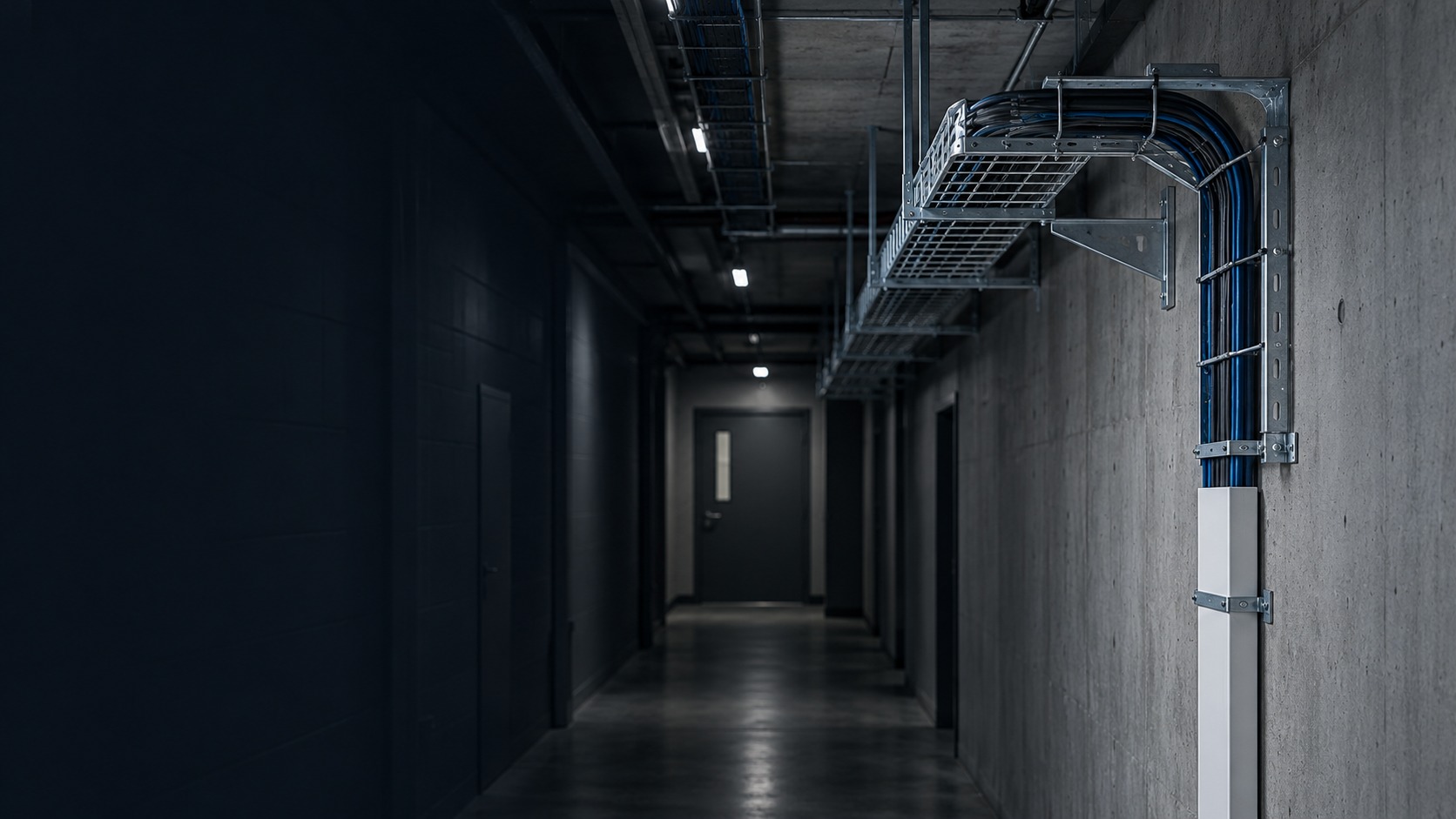
Cable tray, ladder and trunking in a service corridor (illustration)

Cable Tray / Trunking / Conduit in Kuching & Sarawak

Plan containment for electrical cable routes with suitable supports, segregation and service access. Cable loading, heat, material, penetrations and bonding are assessed as part of the electrical installation, not as decorative routing.

System selection and integration guideLV Electrical
ElectricalCable Tray / Trunking / Conduit
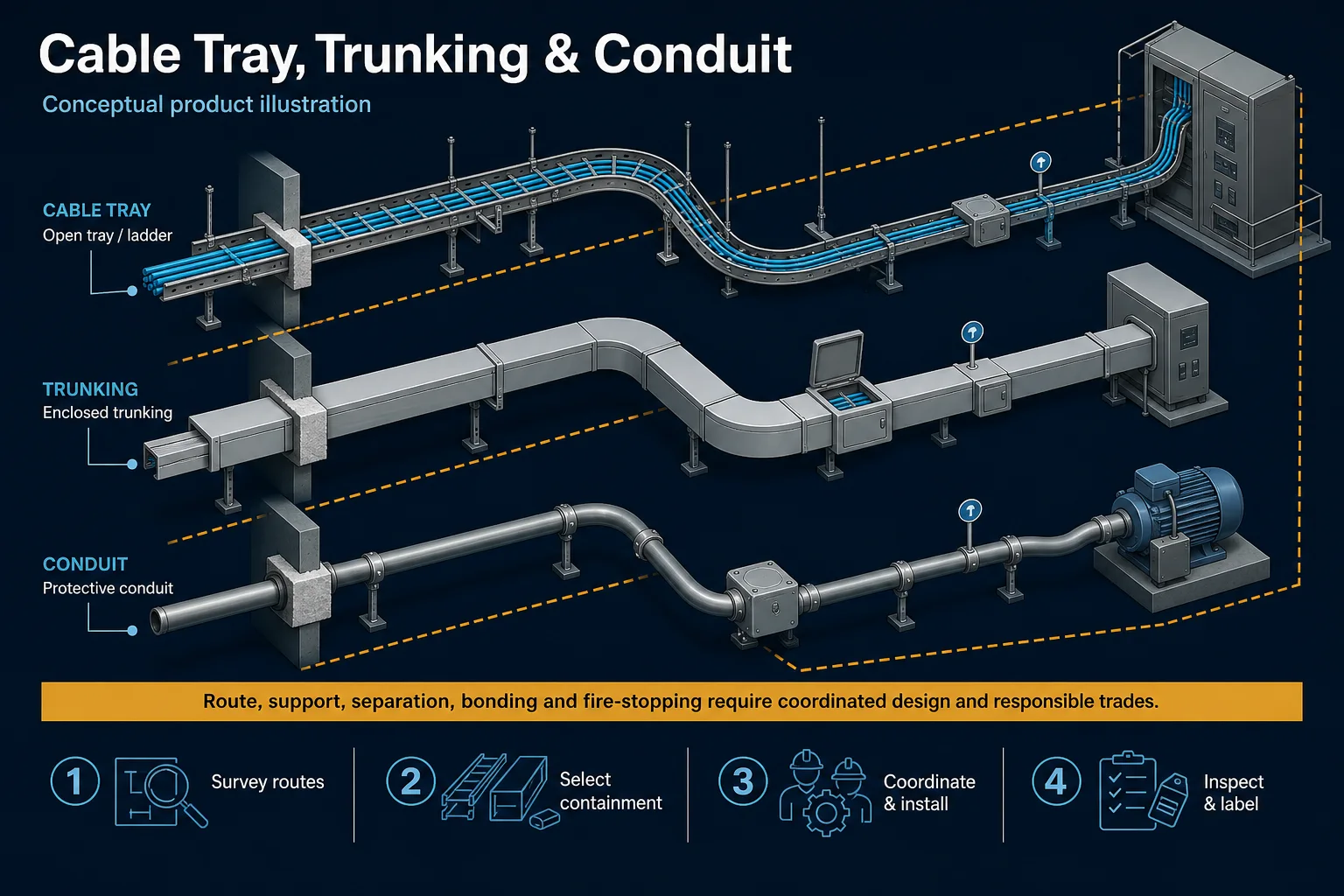
Cable Tray, Trunking and Conduit system diagram
  1. 01Cable Tray / Trunking / Conduit
  2. 02Supply, protection and safe isolation
  3. 03Distribution or containment
  4. 04inspection and circuit identification
Conceptual Cable Tray / Trunking / Conduit product and system illustration.
Illustration & scope boundary

Conceptual Cable Tray / Trunking / Conduit product and system illustration for Electrical. Final device form, model, interfaces and quantities are confirmed from the assessed scope and approved product data. Conceptual supply, protect and verify path for Cable Tray / Trunking / Conduit, derived from this page's scope, interfaces and acceptance record.

Conceptual planning path — not an as-built drawing or project photograph.

What Cable Tray / Trunking / Conduit covers

Plan containment for electrical cable routes with suitable supports, segregation and service access. Cable loading, heat, material, penetrations and bonding are assessed as part of the electrical installation, not as decorative routing.

It sits in LV Electrical under Electrical. The final deliverable is shaped by the intended outcome, the installed or proposed environment and the interfaces that must be owned, supplied, integrated and tested.

When to use this page

Plan containment for electrical cable routes with suitable supports, segregation and service access. Cable loading, heat, material, penetrations and bonding are assessed as part of the electrical installation, not as decorative routing. Confirm circuit routes and cable schedule, expected loading, material, supports, segregation, penetrations, fire-stopping responsibility, service access and qualified installation requirements.
Typical environments to assess

  • Commercial and industrial cable routes
  • Electrical and ELV routes with agreed segregation
  • Racks and service corridors
  • Approved underground routes and accessible chambers

Engineering SOP & Handover Checklist

From the initial brief to the handover record: what to prepare, check and confirm with HJ.

01

Operational Purpose & Workflow

Define Electrical as the operating result for Cable Tray / Trunking / Conduit, including the users, process and exceptions it must serve.

Plan containment for electrical cable routes with suitable supports, segregation and service access. Cable loading, heat, material, penetrations and bonding are assessed as part of the electrical installation, not as decorative routing.

02

Pre-Attendance Evidence

For Cable Tray / Trunking / Conduit, confirm load and diversity schedule, source, DB capacity and fault conditions, route, protection, earthing and competent-person boundary.

Confirm circuit routes and cable schedule, expected loading, material, supports, segregation, penetrations, fire-stopping responsibility, service access and qualified installation requirements.

03

Diagnostic & Testing Path

Map Supply or source → Isolation & protection → Distribution or containment → Load & test record for Cable Tray / Trunking / Conduit and identify every interface owned by HJ, the customer, ISD supply or an appointed specialist.

04

System & Responsibility Boundary

Design, isolation, testing and energisation require applicable competent or appointed persons; ELV interfaces do not transfer electrical responsibility. Final models, capacities and quantities still follow survey, compatibility and availability.

Containment supports and organises cables; it does not establish circuit performance or fire compliance by itself. Structural support, segregation, bonding, penetrations and civil approvals have agreed responsible owners.

05

Acceptance & Handover Record

For Cable Tray / Trunking / Conduit, record inspection and circuit identification, applicable continuity, insulation, polarity and earth tests, protection, load, SLD and signed records; also agree protection and isolation checks, load or functional test, label, drawing and responsible-person record before handover.

Check the agreed route, support and access arrangement, cable segregation and labels. Record penetrations, bonding or civil-work interfaces, drawings and any incomplete reinstatement.

Engineering Scope, Regulatory & Service Boundaries

Responsibility and evidence boundary

HJ coordinates assessment, engineering, installation, integration, testing and lifecycle support only for the scope recorded in the quotation. ISD handles catalogue, model, datasheet, supply and availability enquiries. Customer, consultant, builder and appointed-specialist responsibilities remain explicit.

Regulated or multi-discipline work proceeds only after site assessment and confirmation of the competent, qualified or appointed persons, approvals, safe isolation and responsibility required for that scope.

This focused topic remains connected to its complete system owner. Final models, quantities, interfaces and included work are confirmed in the assessed quotation.

Questions before proceeding

Use the answers as a planning boundary; site conditions and written scope remain decisive.

What should be confirmed for Cable Tray / Trunking / Conduit?

Confirm circuit routes and cable schedule, expected loading, material, supports, segregation, penetrations, fire-stopping responsibility, service access and qualified installation requirements.

What are the limits of this scope?

Containment supports and organises cables; it does not establish circuit performance or fire compliance by itself. Structural support, segregation, bonding, penetrations and civil approvals have agreed responsible owners.

What should be checked before handover?

Check the agreed route, support and access arrangement, cable segregation and labels. Record penetrations, bonding or civil-work interfaces, drawings and any incomplete reinstatement.

Planning Cable Tray / Trunking / Conduit? Tell HJ about your site

Tell us where it will be used, what it needs to do and what equipment you already have. HJ will recommend the right system, explain who is responsible for what, and agree the next step with you.