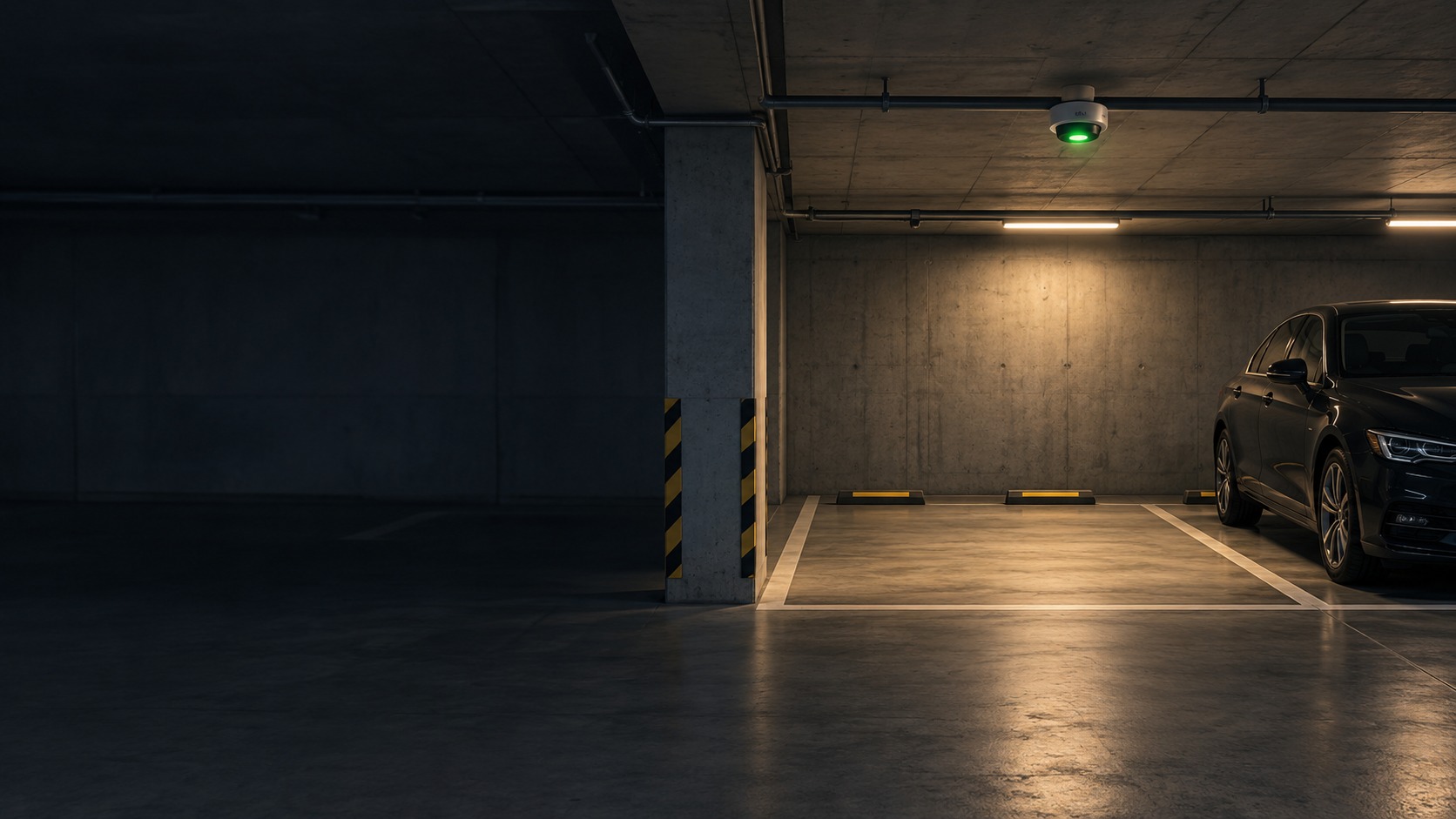
Parking-bay occupancy sensor and covered bays (illustration)

Parking Guidance & Vacancy Detection in Kuching & Sarawak

Guide drivers using a defined parking-bay detection and status-update system. HJ checks bay layout, the supported sensor or camera method, mapping and controller/display integration, then tests occupied, vacant and fault conditions; guidance is separate from vehicle authorisation and parking payment.

System selection and integration guideParking Management
ParkingParking Guidance & Vacancy Detection
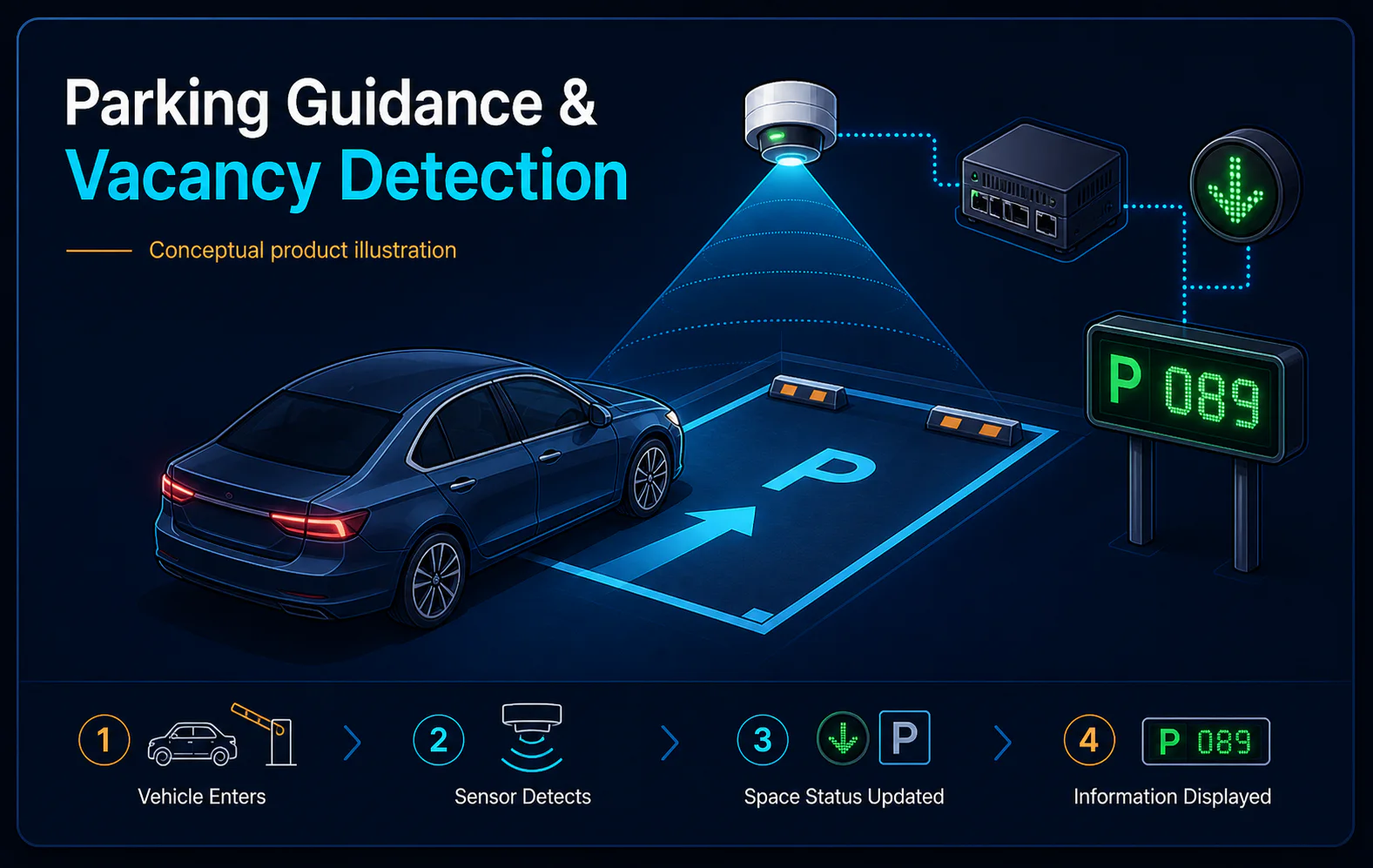
Parking Guidance and Vacancy Detection system diagram
  1. 01Parking Guidance & Vacancy Detection
  2. 02Lane control, safety and vehicle identity
  3. 03Gate, lane or parking interface
  4. 04season, visitor and casual end-to-end journeys
Conceptual Parking Guidance & Vacancy Detection product and system illustration.
Illustration & scope boundary

Conceptual Parking Guidance & Vacancy Detection product and system illustration for Parking. Final device form, model, interfaces and quantities are confirmed from the assessed scope and approved product data. Conceptual vehicle journey and lane safety for Parking Guidance & Vacancy Detection, derived from this page's scope, interfaces and acceptance record.

Conceptual planning path — not an as-built drawing or project photograph.

What Parking Guidance & Vacancy Detection covers

Guide drivers using a defined parking-bay detection and status-update system. HJ checks bay layout, the supported sensor or camera method, mapping and controller/display integration, then tests occupied, vacant and fault conditions; guidance is separate from vehicle authorisation and parking payment.

It sits in Parking Management under Parking. The final deliverable is shaped by the intended outcome, the installed or proposed environment and the interfaces that must be owned, supplied, integrated and tested.

When to use this page

Bay/floor plan, ceiling and mounting conditions, detector method, bay mapping, controller/network, display zones and stale-status procedure.
Typical environments to assess

  • Covered parking bays with a mapped detection method.
  • Floor/zone guidance with an agreed controller and data source.
  • Sites defining occupied, vacant and unavailable-status behaviour.

Engineering SOP & Handover Checklist

From the initial brief to the handover record: what to prepare, check and confirm with HJ.

01

Operational Purpose & Workflow

Guide drivers using a defined parking-bay detection and status-update system. HJ checks bay layout, the supported sensor or camera method, mapping and controller/display integration, then tests occupied, vacant and fault conditions; guidance is separate from vehicle authorisation and parking payment.

02

Pre-Attendance Evidence

Bay/floor plan, ceiling and mounting conditions, detector method, bay mapping, controller/network, display zones and stale-status procedure.

03

Diagnostic & Testing Path

Confirm compatible identification or bay-detection devices, lane/bay mapping, controller, network and selected management/display functions. Credentials, occupancy guidance, intercom and payment have separate dependencies; only confirmed interfaces belong to the agreed scope.

04

System & Responsibility Boundary

Test the selected normal, denied and exception journeys, configured record/status updates and recovery under agreed conditions. Document stale or missing data, network/power effects and operator responsibilities; no system is promised perfect recognition or fault-free service.

05

Acceptance & Handover Record

Record exact devices/versions, lane or bay mapping, approved rules, authorised administrator, licences/interfaces where needed, test results and unresolved limits. The owner controls personal-data access, retention, export and revocation; third-party payment remains separately owned.

Engineering Scope, Regulatory & Service Boundaries

Responsibility and evidence boundary

HJ coordinates assessment, engineering, installation, integration, testing and lifecycle support only for the scope recorded in the quotation. ISD handles catalogue, model, datasheet, supply and availability enquiries. Customer, consultant, builder and appointed-specialist responsibilities remain explicit.

Identity, image, credential and movement data require an authorised controller, lawful access, proportionate collection, retention rules and recorded administrator responsibility.

This focused topic remains connected to its complete system owner. Final models, quantities, interfaces and included work are confirmed in the assessed quotation.

Questions before proceeding

Use the answers as a planning boundary; site conditions and written scope remain decisive.

Does a green indicator prove every bay count is correct?

No. Check detector configuration, mapping, aggregation and display updates on the actual layout. Test occupied and vacant bays and a detector/network fault; define how operators handle an unavailable or stale status.

Which connected functions need separate confirmation?

Confirm compatible identification or bay-detection devices, lane/bay mapping, controller, network and selected management/display functions. Credentials, occupancy guidance, intercom and payment have separate dependencies; only confirmed interfaces belong to the agreed scope.

What should be tested and recorded for this scope?

Test the selected normal, denied and exception journeys, configured record/status updates and recovery under agreed conditions. Document stale or missing data, network/power effects and operator responsibilities; no system is promised perfect recognition or fault-free service. Record exact devices/versions, lane or bay mapping, approved rules, authorised administrator, licences/interfaces where needed, test results and unresolved limits. The owner controls personal-data access, retention, export and revocation; third-party payment remains separately owned.

Planning Parking Guidance & Vacancy Detection? Tell HJ about your site

Tell us where it will be used, what it needs to do and what equipment you already have. HJ will recommend the right system, explain who is responsible for what, and agree the next step with you.