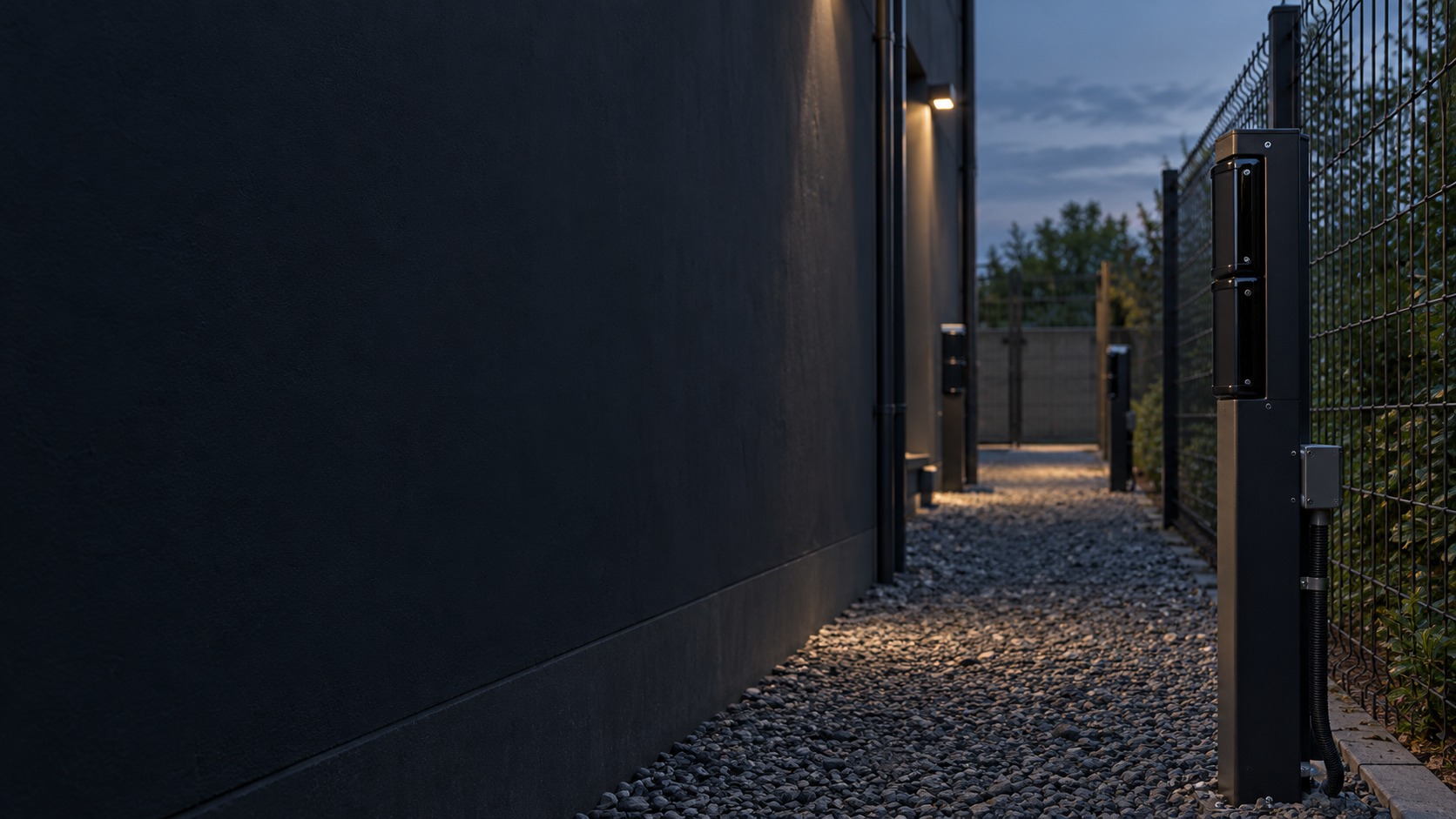
Outdoor intrusion beam detectors at a fence boundary (illustration)

Infrared Beam & Outdoor Intrusion Detection in Kuching & Sarawak

Detect a crossing at a defined outdoor line using suitable beam pairs or intrusion sensors. HJ checks stable mounting, clear alignment, vegetation and the supported alarm input, then verifies the zone and response; intrusion beams are not a substitute for gate anti-crush safety devices.

System selection and integration guidePerimeter Security
PerimeterInfrared Beam & Outdoor Intrusion Detection
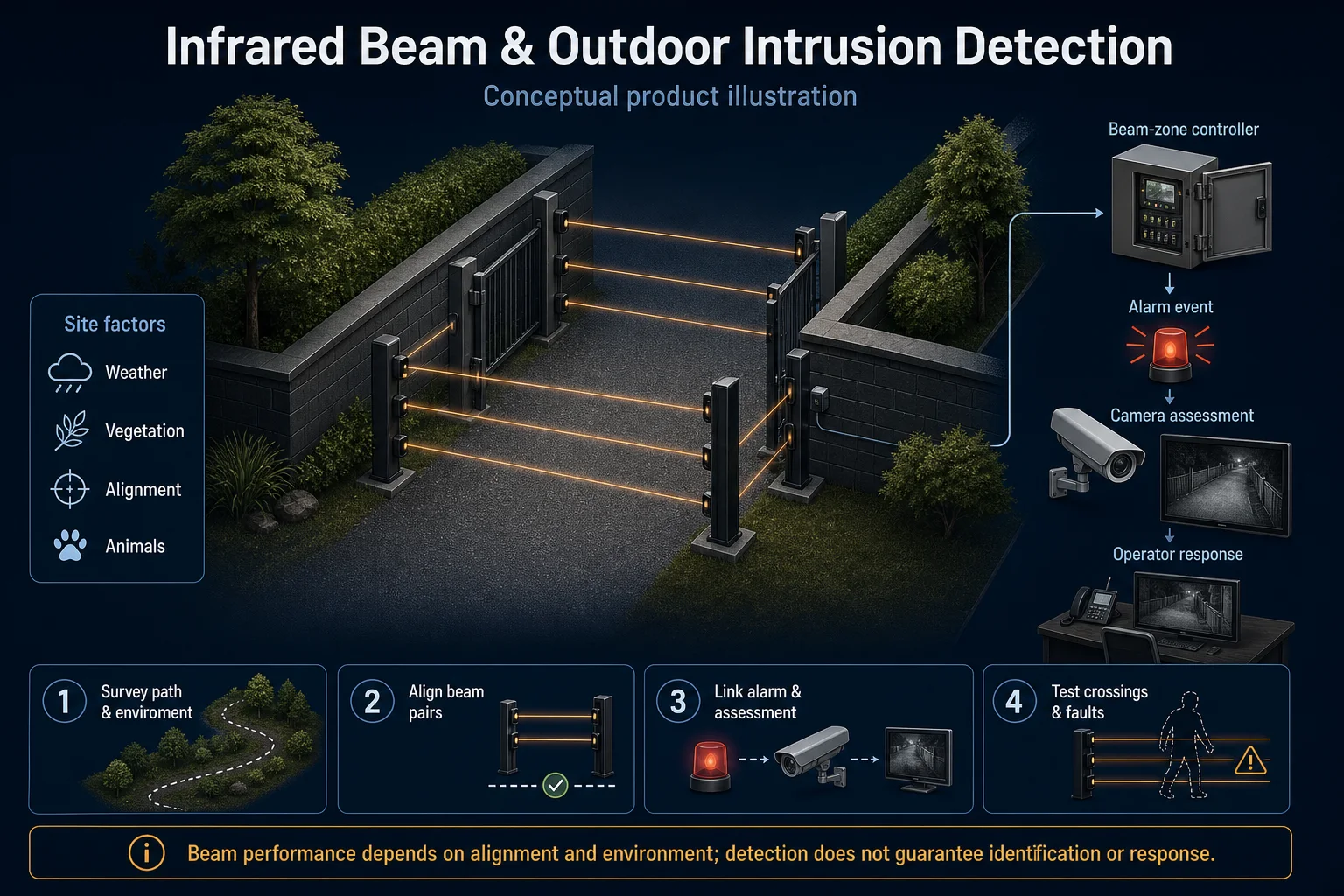
Infrared Beam and Outdoor Intrusion Detection system diagram
  1. 01Infrared Beam & Outdoor Intrusion Detection
  2. 02Site fit, interfaces and verification
  3. 03Notification & response path
  4. 04representative crossings by zone
Conceptual Infrared Beam & Outdoor Intrusion Detection product and system illustration.
Illustration & scope boundary

Conceptual Infrared Beam & Outdoor Intrusion Detection product and system illustration for Perimeter. Final device form, model, interfaces and quantities are confirmed from the assessed scope and approved product data. Conceptual evidence and response path for Infrared Beam & Outdoor Intrusion Detection, derived from this page's scope, interfaces and acceptance record.

Conceptual planning path — not an as-built drawing or project photograph.

What Infrared Beam & Outdoor Intrusion Detection covers

Detect a crossing at a defined outdoor line using suitable beam pairs or intrusion sensors. HJ checks stable mounting, clear alignment, vegetation and the supported alarm input, then verifies the zone and response; intrusion beams are not a substitute for gate anti-crush safety devices.

It sits in Perimeter Security under Perimeter. The final deliverable is shaped by the intended outcome, the installed or proposed environment and the interfaces that must be owned, supplied, integrated and tested.

When to use this page

Boundary geometry, transmitter and receiver positions, clear sight line, foliage and reflections, stable posts, field power, tamper inputs and the alarm-response owner.
Typical environments to assess

  • Defined clear perimeter lines
  • Commercial compounds with supported alarm inputs
  • Approach paths with stable mounting and an agreed response owner

Engineering SOP & Handover Checklist

From the initial brief to the handover record: what to prepare, check and confirm with HJ.

01

Operational Purpose & Workflow

Detect a crossing at a defined outdoor line using suitable beam pairs or intrusion sensors. HJ checks stable mounting, clear alignment, vegetation and the supported alarm input, then verifies the zone and response; intrusion beams are not a substitute for gate anti-crush safety devices.

02

Pre-Attendance Evidence

Boundary geometry, transmitter and receiver positions, clear sight line, foliage and reflections, stable posts, field power, tamper inputs and the alarm-response owner.

03

Diagnostic & Testing Path

Coordinate the detector’s supported alarm and tamper outputs with the receiving panel and verification process. Assign arming, response and vegetation maintenance; gate safety sensors remain a separate safety function.

04

System & Responsibility Boundary

Unstable mounting, blocked or reflected paths, foliage and unsuitable environmental conditions can cause missed or unwanted events. Intrusion detection does not physically secure a gate or replace anti-crush protection.

05

Acceptance & Handover Record

Document detector positions, alignment and supported zone inputs. Verify representative crossings, alarm receipt, tamper and agreed fault behaviour, and hand over the clear-path and maintenance responsibilities.

Engineering Scope, Regulatory & Service Boundaries

Responsibility and evidence boundary

HJ coordinates assessment, engineering, installation, integration, testing and lifecycle support only for the scope recorded in the quotation. ISD handles catalogue, model, datasheet, supply and availability enquiries. Customer, consultant, builder and appointed-specialist responsibilities remain explicit.

Identity, image, credential and movement data require an authorised controller, lawful access, proportionate collection, retention rules and recorded administrator responsibility.

This focused topic remains connected to its complete system owner. Final models, quantities, interfaces and included work are confirmed in the assessed quotation.

Questions before proceeding

Use the answers as a planning boundary; site conditions and written scope remain decisive.

Why is alignment important for infrared beams?

The transmitter and receiver need a stable clear path. Movement, obstruction or reflected paths can affect the signal. Alignment and representative crossing tests should be documented after final mounting, with future vegetation and maintenance responsibility agreed.

Can an intrusion beam replace a gate safety photocell?

No. Perimeter intrusion and safe gate motion serve different purposes. Gate anti-crush and safety devices must remain part of the correctly designed gate control system, regardless of the intrusion alert arrangement.

What should I send HJ for Infrared Beam & Outdoor Intrusion Detection?

Boundary geometry, transmitter and receiver positions, clear sight line, foliage and reflections, stable posts, field power, tamper inputs and the alarm-response owner. Share authorised equipment and scene information; do not send passwords or personal footage through a public form.

Planning Infrared Beam & Outdoor Intrusion Detection? Tell HJ about your site

Tell us where it will be used, what it needs to do and what equipment you already have. HJ will recommend the right system, explain who is responsible for what, and agree the next step with you.