Tripod / Flap / Swing Barrier in Kuching & Sarawak

Worker, lobby and school pedestrian-access lanes with credential integration. This page focuses on Pedestrian Access within Turnstile / Pedestrian Access, with site inputs, interfaces, verification and responsibility kept visible.

System selection and integration guideTurnstile / Pedestrian Access
Pedestrian AccessTripod / Flap / Swing Barrier
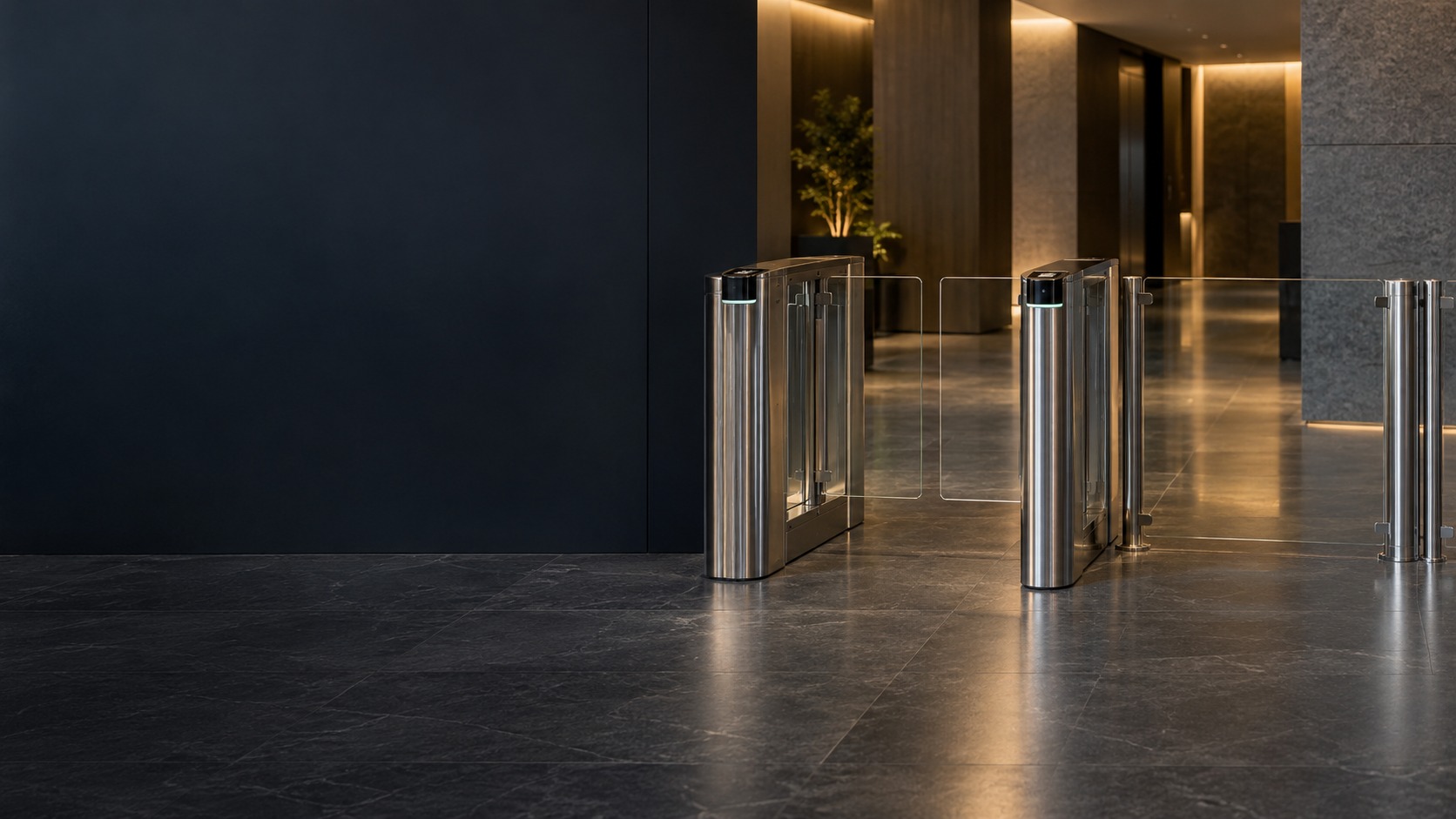
Conceptual Tripod, Flap and Swing Barrier canvas comparing lane hardware, credential interfaces, safety sensing, emergency release and a separately planned accessible route.
  1. 01Tripod / Flap / Swing Barrier
  2. 02Lane flow and safe passage
  3. 03Door, lane or workflow interface
  4. 04grant and deny in both directions
Conceptual Tripod / Flap / Swing Barrier product and system illustration.
Illustration & scope boundary

Conceptual Tripod / Flap / Swing Barrier product and system illustration for Pedestrian Access. Final device form, model, interfaces and quantities are confirmed from the assessed scope and approved product data. Conceptual identity and permission path for Tripod / Flap / Swing Barrier, derived from this page's scope, interfaces and acceptance record.

Conceptual planning path — not an as-built drawing or project photograph.

What Tripod / Flap / Swing Barrier covers

Worker, lobby and school pedestrian-access lanes with credential integration.

It sits in Turnstile / Pedestrian Access under Pedestrian Access. The final deliverable is shaped by the intended outcome, the installed or proposed environment and the interfaces that must be owned, supplied, integrated and tested.

When to use this page

Use this page when Tripod / Flap / Swing Barrier is the specific system decision, not merely one line inside a wider Turnstile / Pedestrian Access quotation. Its exact focus is Pedestrian Access. Assessment records peak pedestrian flow, lane count, width and accessibility, credential speed, egress and anti-tailgating expectation and closes with grant and deny in both directions, obstruction and anti-pinch response, emergency release, peak-flow and event tests. Adjacent Turnstile / Pedestrian Access options may share infrastructure while requiring different capacity, interfaces, operating rules or evidence, so the selection and handover result remain independently reviewable.

Typical environments to assess

  • Schools and campuses
  • Training facilities
  • Institutional buildings
  • Multi-block sites
identity access

Field decision dossier

Use these four records to keep Tripod / Flap / Swing Barrier distinct from adjacent systems or service tasks.

01

Operational purpose

Tripod / Flap / Swing Barrier focuses on Pedestrian Access. Meters pedestrian passage through a controlled lane using identity, direction, safety and exception logic.

02

Site evidence to collect

For Tripod / Flap / Swing Barrier, record peak pedestrian flow, lane count, width and accessibility, credential speed, egress and anti-tailgating expectation; add user groups, credentials, schedules, controlled openings, safe-exit behaviour, privacy ownership and exception handling.

03

Primary failure boundary

Throughput and anti-tailgating performance vary with hardware and user behaviour; accessible and emergency egress cannot be inferred from standard lanes. Door, lane, lift or enrolment conditions can invalidate software rules, while emergency release and data-controller duties override convenience.

04

Acceptance record

Accept Tripod / Flap / Swing Barrier with grant and deny in both directions, obstruction and anti-pinch response, emergency release, peak-flow and event tests; retain granted, denied, expired and emergency scenarios, physical interface state, administrator roles and event-log evidence.

Engineering and service decisions

These checkpoints make this page specific to Tripod / Flap / Swing Barrier rather than a generic keyword page.

01

Tripod / Flap / Swing Barrier outcome

Define Pedestrian Access as the operating result for Tripod / Flap / Swing Barrier, including the users, process and exceptions it must serve.

02

Site and design inputs

For Tripod / Flap / Swing Barrier, confirm peak pedestrian flow, lane count, width and accessibility, credential speed, egress and anti-tailgating expectation.

03

Integration path

Map Identity or request → Authorisation rule → Door, lane or workflow interface → Event & exception record for Tripod / Flap / Swing Barrier and identify every interface owned by HJ, the customer, ISD supply or an appointed specialist.

04

Selection constraint

Throughput and anti-tailgating performance vary with hardware and user behaviour; accessible and emergency egress cannot be inferred from standard lanes. Final models, capacities and quantities still follow survey, compatibility and availability.

05

Acceptance evidence

For Tripod / Flap / Swing Barrier, record grant and deny in both directions, obstruction and anti-pinch response, emergency release, peak-flow and event tests; also agree authorised and denied transactions, safe release or exception behaviour, event time and operator record before handover.

Responsibility and evidence boundary

HJ coordinates assessment, engineering, installation, integration, testing and lifecycle support only for the scope recorded in the quotation. ISD handles catalogue, model, datasheet, supply and availability enquiries. Customer, consultant, builder and appointed-specialist responsibilities remain explicit.

Identity, image, credential and movement data require an authorised controller, lawful access, proportionate collection, retention rules and recorded administrator responsibility.

This focused topic remains connected to its complete system owner. Final models, quantities, interfaces and included work are confirmed in the assessed quotation.

Questions before proceeding

Use the answers as a planning boundary; site conditions and written scope remain decisive.

What should be decided about tripod, flap, swing and speed-gate choice for the Pedestrian Access topic Tripod / Flap / Swing Barrier?

Tripod / Flap / Swing Barrier focuses on Pedestrian Access within Pedestrian Access. Meters pedestrian passage through a controlled lane using identity, direction, safety and exception logic. The approved selection must respect this boundary: Throughput and anti-tailgating performance vary with hardware and user behaviour; accessible and emergency egress cannot be inferred from standard lanes.

Which site inputs and handover evidence shape Tripod / Flap / Swing Barrier?

Confirm peak pedestrian flow, lane count, width and accessibility, credential speed, egress and anti-tailgating expectation. Record grant and deny in both directions, obstruction and anti-pinch response, emergency release, peak-flow and event tests, then complete authorised and denied transactions, safe release or exception behaviour, event time and operator record against the approved scope.

Does this page mean the listed hardware is in stock?

No. HJ handles engineering, installation and integration. ISD handles product-family, model, datasheet, supply and availability enquiries separately.

Turn this focused topic into an assessed scope

Share the site, intended outcome, existing equipment and timing. HJ will confirm the correct system route, responsibility boundary and next step.