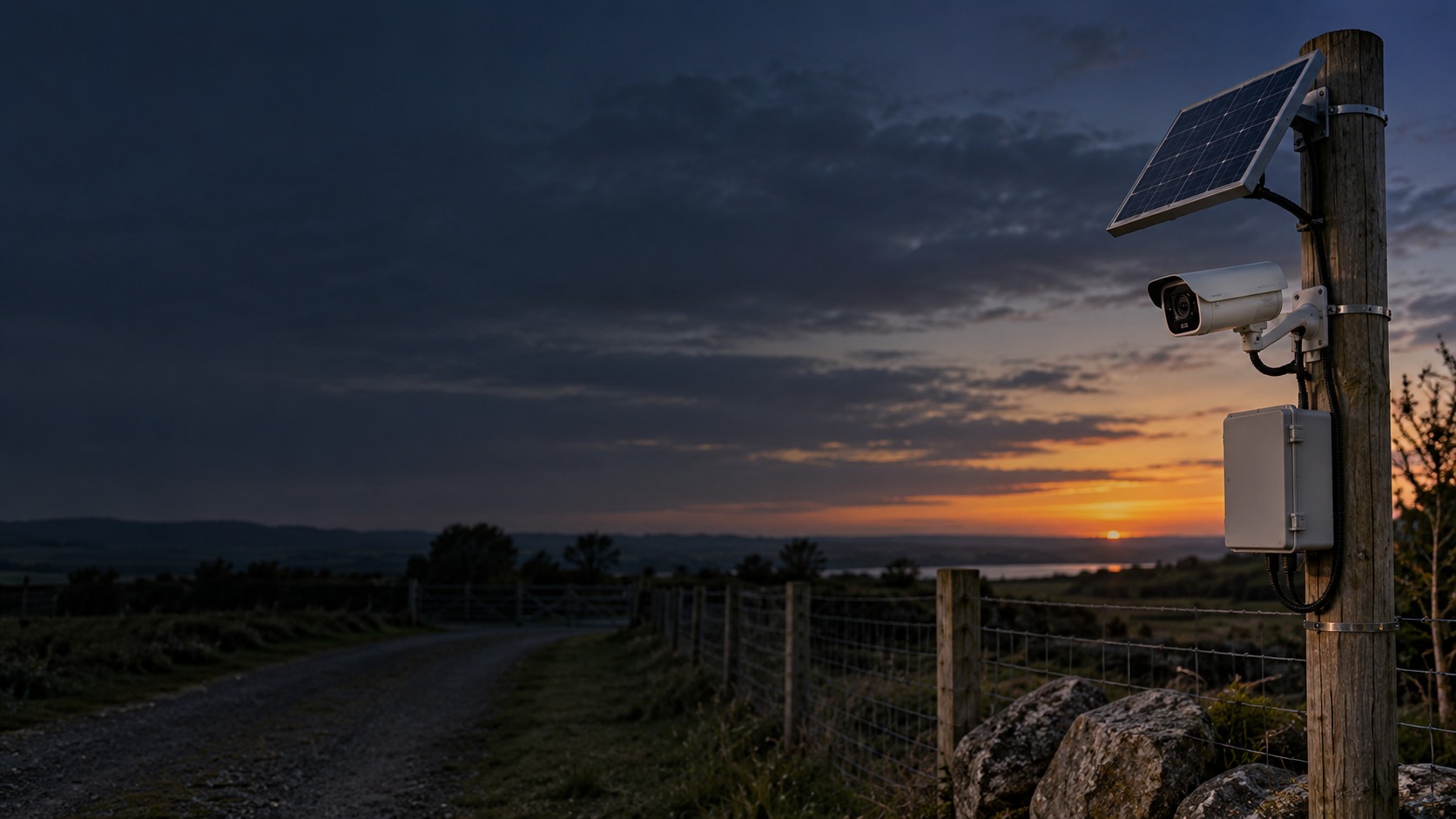
Pole-mounted solar panel, CCTV camera and battery enclosure – 4G & Solar CCTV in Kuching & Sarawak (illustration)

4G & Solar CCTV in Kuching & Sarawak

Assess 4G and solar CCTV where fixed internet or mains power is difficult to provide. HJ checks cellular coverage, SIM settings, sunlight, battery load and the intended recording mode, so a remote camera is planned around measurable site conditions rather than assumed to record continuously in all weather.

System selection and integration guideCCTV / Video Surveillance
Core CCTV4G & Solar CCTV
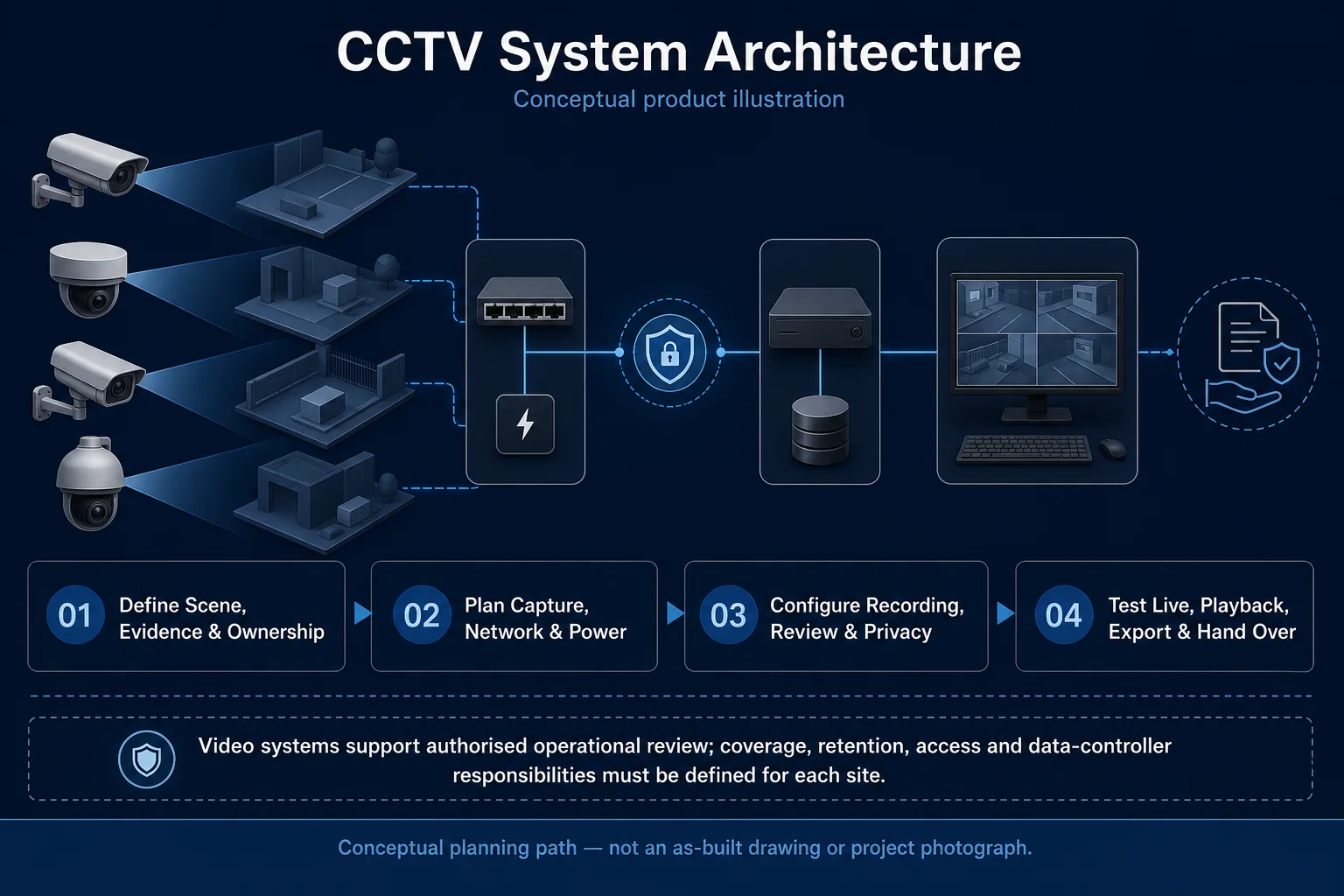
CCTV System Architecture system diagram
  1. 014G & Solar CCTV
  2. 02Radio path, power and resilience
  3. 03Transport & storage
  4. 04representative day and night clips
Conceptual 4G & Solar CCTV product and system illustration.
Illustration & scope boundary

Conceptual 4G & Solar CCTV product and system illustration for Core CCTV. Final device form, model, interfaces and quantities are confirmed from the assessed scope and approved product data. Conceptual evidence and response path for 4G & Solar CCTV, derived from this page's scope, interfaces and acceptance record.

Conceptual planning path — not an as-built drawing or project photograph.

What 4G & Solar CCTV covers

Assess 4G and solar CCTV where fixed internet or mains power is difficult to provide. HJ checks cellular coverage, SIM settings, sunlight, battery load and the intended recording mode, so a remote camera is planned around measurable site conditions rather than assumed to record continuously in all weather.

It sits in CCTV / Video Surveillance under Core CCTV. The final deliverable is shaped by the intended outcome, the installed or proposed environment and the interfaces that must be owned, supplied, integrated and tested.

When to use this page

Signal at the actual pole, SIM and data plan, APN requirements, panel orientation and shading, daily camera load, battery autonomy target and local playback needs.
Typical environments to assess

  • Remote compounds without practical wired internet
  • Rural approaches with measured mobile coverage
  • Temporary sites with assessed sunlight and a defined operating mode

Engineering SOP & Handover Checklist

From the initial brief to the handover record: what to prepare, check and confirm with HJ.

01

Operational Purpose & Workflow

Assess 4G and solar CCTV where fixed internet or mains power is difficult to provide. HJ checks cellular coverage, SIM settings, sunlight, battery load and the intended recording mode, so a remote camera is planned around measurable site conditions rather than assumed to record continuously in all weather.

02

Pre-Attendance Evidence

Signal at the actual pole, SIM and data plan, APN requirements, panel orientation and shading, daily camera load, battery autonomy target and local playback needs.

03

Diagnostic & Testing Path

Coordinate the actual cellular radio, SIM and APN with local or supported remote storage, camera operating mode and solar charging. Account access, data use and low-battery response need clear ownership.

04

System & Responsibility Boundary

Poor signal, an unsuitable SIM, panel shade, prolonged low sunlight or a heavier recording load can take the camera offline. Do not promise all-weather autonomy, uninterrupted 4G access or continuous recording without a validated design.

05

Acceptance & Handover Record

Record kit configuration, panel location, field signal and SIM settings. Test playback, agreed recording mode and remote access, with battery behaviour and low-charge or network-loss limitations documented.

Engineering Scope, Regulatory & Service Boundaries

Responsibility and evidence boundary

HJ coordinates assessment, engineering, installation, integration, testing and lifecycle support only for the scope recorded in the quotation. ISD handles catalogue, model, datasheet, supply and availability enquiries. Customer, consultant, builder and appointed-specialist responsibilities remain explicit.

Identity, image, credential and movement data require an authorised controller, lawful access, proportionate collection, retention rules and recorded administrator responsibility.

This focused topic remains connected to its complete system owner. Final models, quantities, interfaces and included work are confirmed in the assessed quotation.

Questions before proceeding

Use the answers as a planning boundary; site conditions and written scope remain decisive.

Does a solar camera guarantee continuous recording through every rainy period?

No. Battery capacity, sunlight, shading, camera load and operating mode determine availability. Some models use sleep or event recording. Confirm the exact kit and measure site conditions; define what happens when charge or cellular service is unavailable.

What should be confirmed before choosing a remote camera?

Measure cellular service where the camera will be mounted, assess panel shade and energy demand, and confirm the recording mode, local storage and owner access. The panel and battery design must match the actual kit and site.

What should I send HJ for 4G & Solar CCTV?

Signal at the actual pole, SIM and data plan, APN requirements, panel orientation and shading, daily camera load, battery autonomy target and local playback needs. Share authorised equipment and scene information; do not send passwords or personal footage through a public form.

Planning 4G & Solar CCTV? Tell HJ about your site

Tell us where it will be used, what it needs to do and what equipment you already have. HJ will recommend the right system, explain who is responsible for what, and agree the next step with you.