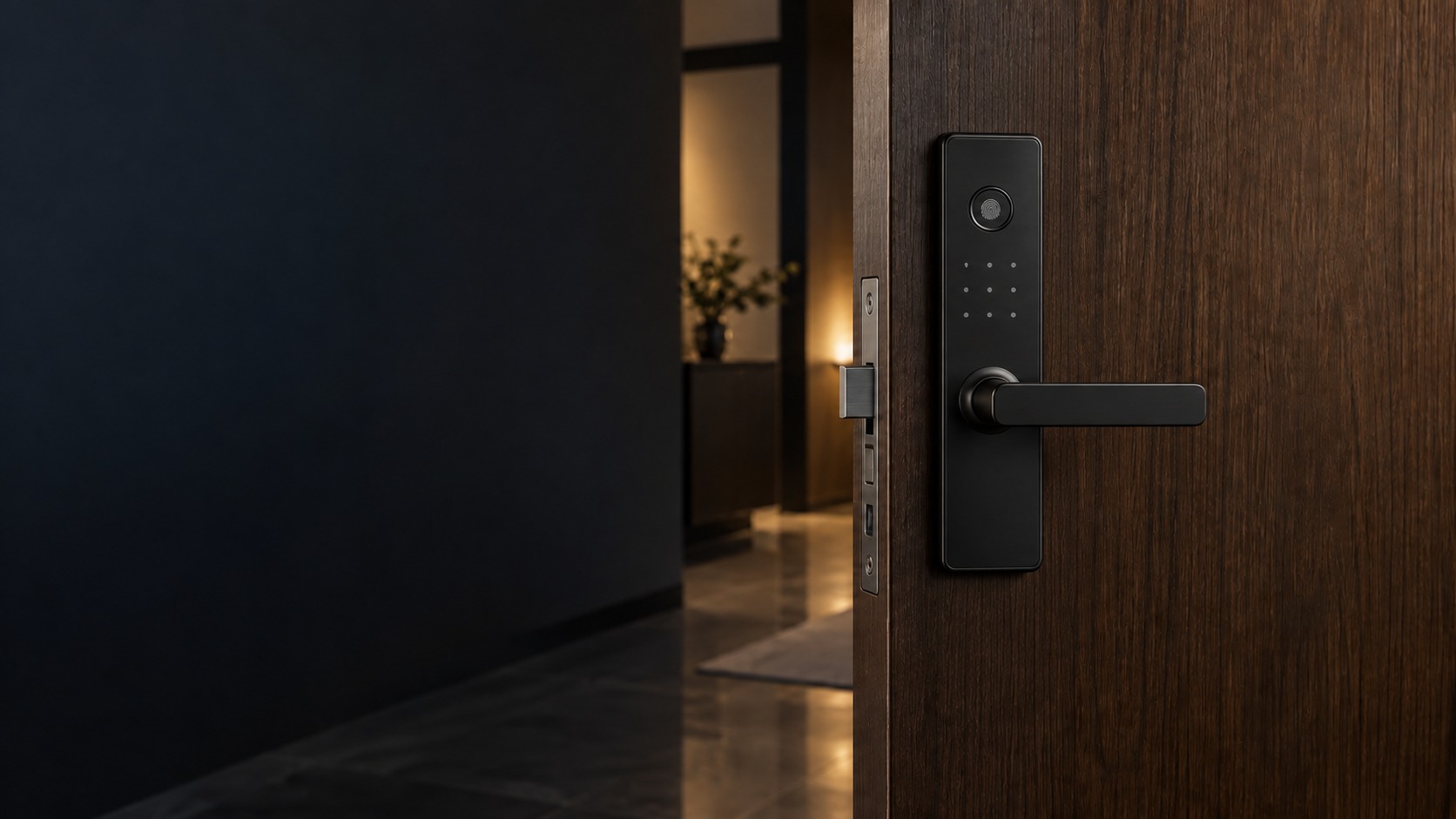
Digital mortise lock on a wooden entrance door (illustration)

Wooden / Aluminium / Glass Door Smart Lock in Kuching & Sarawak

Match the smart-lock mechanism and mounting method to the actual wooden, aluminium or glass door. HJ checks thickness, stile space, handing, mortise and alignment before choosing supported credentials and an agreed emergency-opening method; one lock does not fit every material.

System selection and integration guideSmart Door Lock
Smart LocksWooden / Aluminium / Glass Door Smart Lock
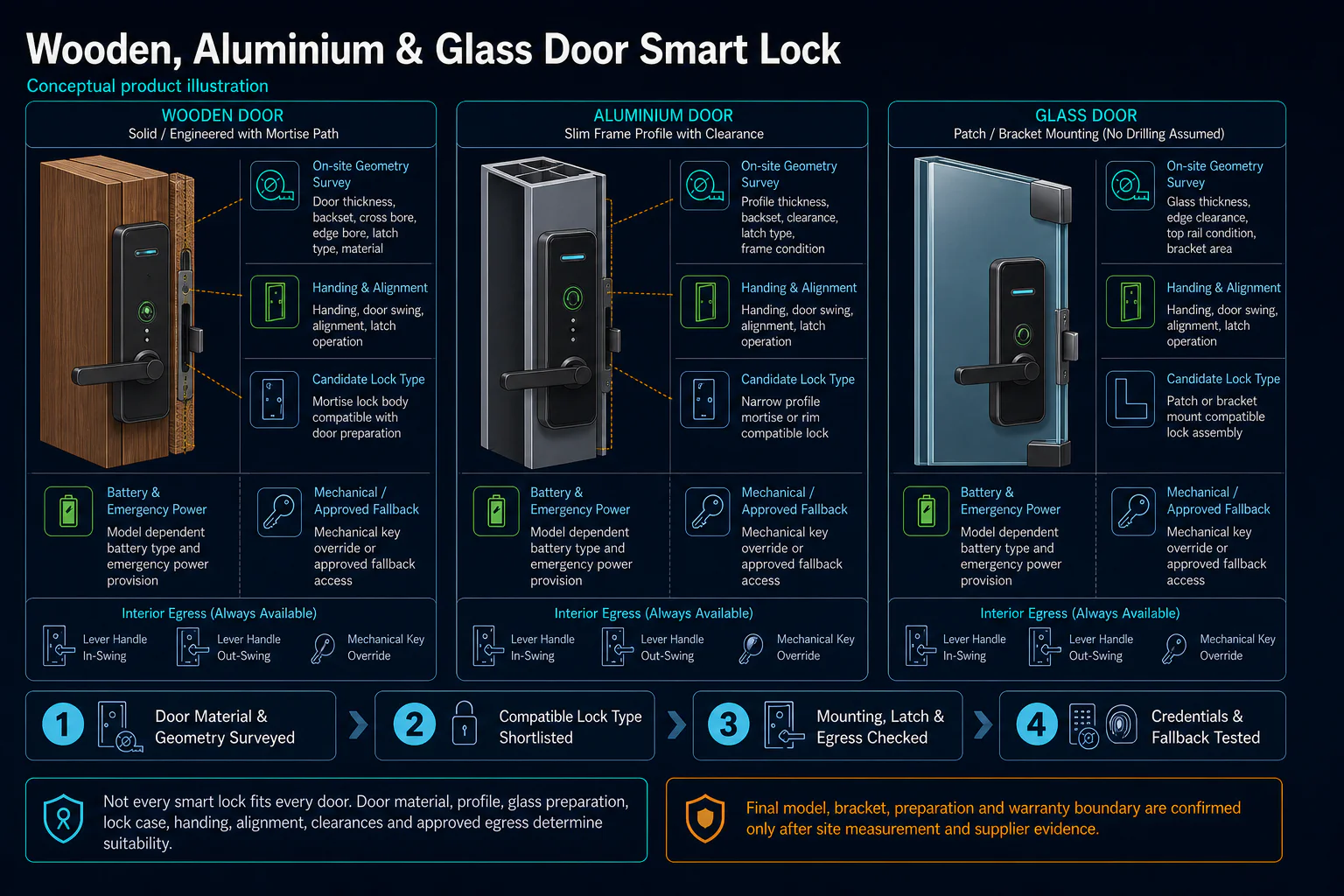
Wooden, Aluminium and Glass Door Smart Lock system diagram
  1. 01Wooden / Aluminium / Glass Door Smart Lock
  2. 02Credential, door hardware and safe release
  3. 03Door, lane or workflow interface
  4. 04administrator, user and temporary credentials
Conceptual Wooden / Aluminium / Glass Door Smart Lock product and system illustration.
Illustration & scope boundary

Conceptual Wooden / Aluminium / Glass Door Smart Lock product and system illustration for Smart Locks. Final device form, model, interfaces and quantities are confirmed from the assessed scope and approved product data. Conceptual identity and permission path for Wooden / Aluminium / Glass Door Smart Lock, derived from this page's scope, interfaces and acceptance record.

Conceptual planning path — not an as-built drawing or project photograph.

What Wooden / Aluminium / Glass Door Smart Lock covers

Match the smart-lock mechanism and mounting method to the actual wooden, aluminium or glass door. HJ checks thickness, stile space, handing, mortise and alignment before choosing supported credentials and an agreed emergency-opening method; one lock does not fit every material.

It sits in Smart Door Lock under Smart Locks. The final deliverable is shaped by the intended outcome, the installed or proposed environment and the interfaces that must be owned, supplied, integrated and tested.

When to use this page

Door material/thickness, stile and frame dimensions, handing, existing holes/mortise, latch alignment, power and permitted emergency-opening method.
Typical environments to assess

  • Owner-authorised residential or office-unit smart locks.
  • Doors assessed for thickness, handing, mortise and alignment.
  • Installed locks requiring supported enrolment, app or battery service.

Engineering SOP & Handover Checklist

From the initial brief to the handover record: what to prepare, check and confirm with HJ.

01

Operational Purpose & Workflow

Match the smart-lock mechanism and mounting method to the actual wooden, aluminium or glass door. HJ checks thickness, stile space, handing, mortise and alignment before choosing supported credentials and an agreed emergency-opening method; one lock does not fit every material.

02

Pre-Attendance Evidence

Door material/thickness, stile and frame dimensions, handing, existing holes/mortise, latch alignment, power and permitted emergency-opening method.

03

Diagnostic & Testing Path

Confirm the exact lock and mortise fit, approved batteries, supported credentials, account binding and any optional gateway/network. A door-material or brand label does not prove outdoor suitability, app compatibility or remote opening.

04

System & Responsibility Boundary

Check permitted credentials, latch/strike alignment, ordinary inside opening and the model-specific authorised recovery provision. Reset or account changes require verified ownership; do not assume low battery, lost internet or a software reset has the same effect on every lock.

05

Acceptance & Handover Record

Record lock/mortise model, door condition, authorised owner/admin handover, approved users and revoked credentials, battery/recovery arrangements, test results and specialist-work boundaries. Do not publish credentials, recovery keys or bypass procedures.

Engineering Scope, Regulatory & Service Boundaries

Responsibility and evidence boundary

HJ coordinates assessment, engineering, installation, integration, testing and lifecycle support only for the scope recorded in the quotation. ISD handles catalogue, model, datasheet, supply and availability enquiries. Customer, consultant, builder and appointed-specialist responsibilities remain explicit.

Identity, image, credential and movement data require an authorised controller, lawful access, proportionate collection, retention rules and recorded administrator responsibility.

This focused topic remains connected to its complete system owner. Final models, quantities, interfaces and included work are confirmed in the assessed quotation.

Questions before proceeding

Use the answers as a planning boundary; site conditions and written scope remain decisive.

Can the same smart lock fit glass and wooden doors?

Do not assume that. Door thickness, stile space, handing, existing mortise and approved mounting differ. Assess the actual opening and model before drilling or selection, and preserve the required mechanical and emergency-opening arrangements.

Which interfaces need confirmation for this scope?

Confirm the exact lock and mortise fit, approved batteries, supported credentials, account binding and any optional gateway/network. A door-material or brand label does not prove outdoor suitability, app compatibility or remote opening.

What should be verified and recorded at handover?

Check permitted credentials, latch/strike alignment, ordinary inside opening and the model-specific authorised recovery provision. Reset or account changes require verified ownership; do not assume low battery, lost internet or a software reset has the same effect on every lock. Record lock/mortise model, door condition, authorised owner/admin handover, approved users and revoked credentials, battery/recovery arrangements, test results and specialist-work boundaries. Do not publish credentials, recovery keys or bypass procedures.

Planning Wooden / Aluminium / Glass Door Smart Lock? Tell HJ about your site

Tell us where it will be used, what it needs to do and what equipment you already have. HJ will recommend the right system, explain who is responsible for what, and agree the next step with you.