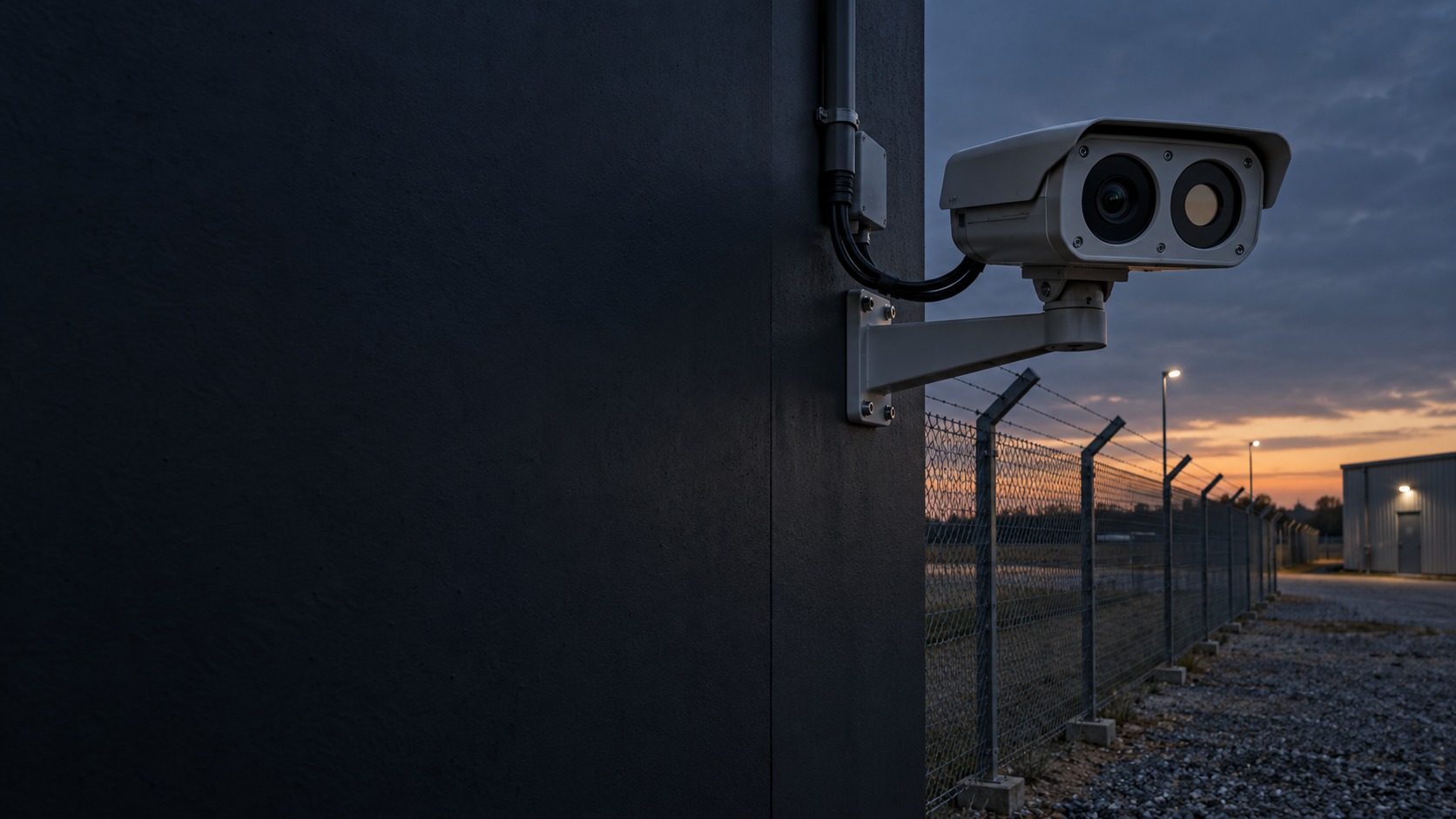
Bi-spectrum perimeter camera with visible and thermal optics (illustration)

Thermal & Long-Range CCTV in Kuching & Sarawak

Assess thermal or long-range cameras for a defined perimeter detection and verification task. HJ checks the required target, lens, field of view and environmental conditions, using visible-camera context where needed; thermal detection alone does not identify a person or prove accurate temperature measurement.

System selection and integration guideCCTV / Video Surveillance
Special CCTVThermal & Long-Range CCTV
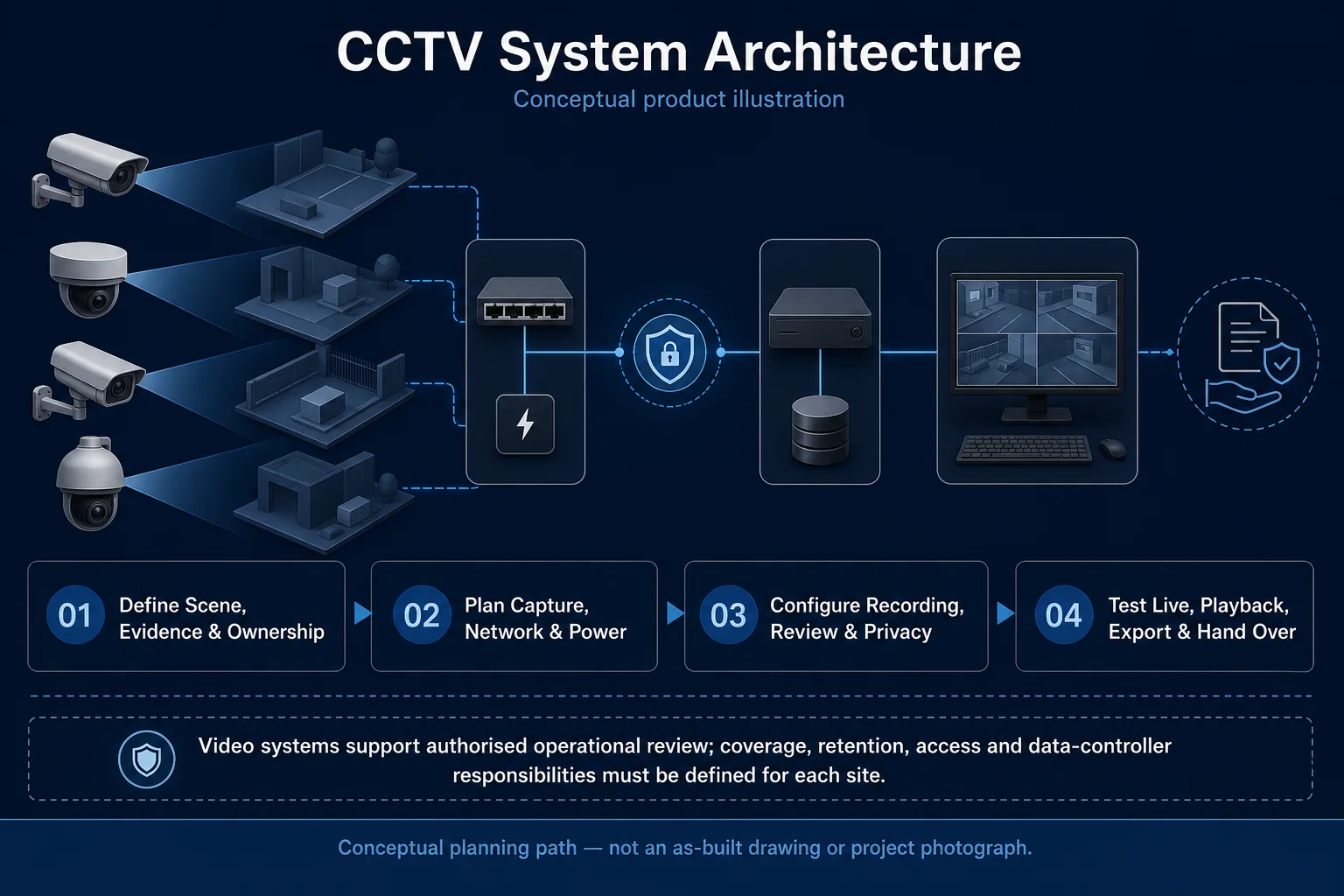
CCTV System Architecture system diagram
  1. 01Thermal & Long-Range CCTV
  2. 02Range, target size and environment
  3. 03Transport & storage
  4. 04representative day and night clips
Conceptual Thermal & Long-Range CCTV product and system illustration.
Illustration & scope boundary

Conceptual Thermal & Long-Range CCTV product and system illustration for Special CCTV. Final device form, model, interfaces and quantities are confirmed from the assessed scope and approved product data. Conceptual evidence and response path for Thermal & Long-Range CCTV, derived from this page's scope, interfaces and acceptance record.

Conceptual planning path — not an as-built drawing or project photograph.

System design

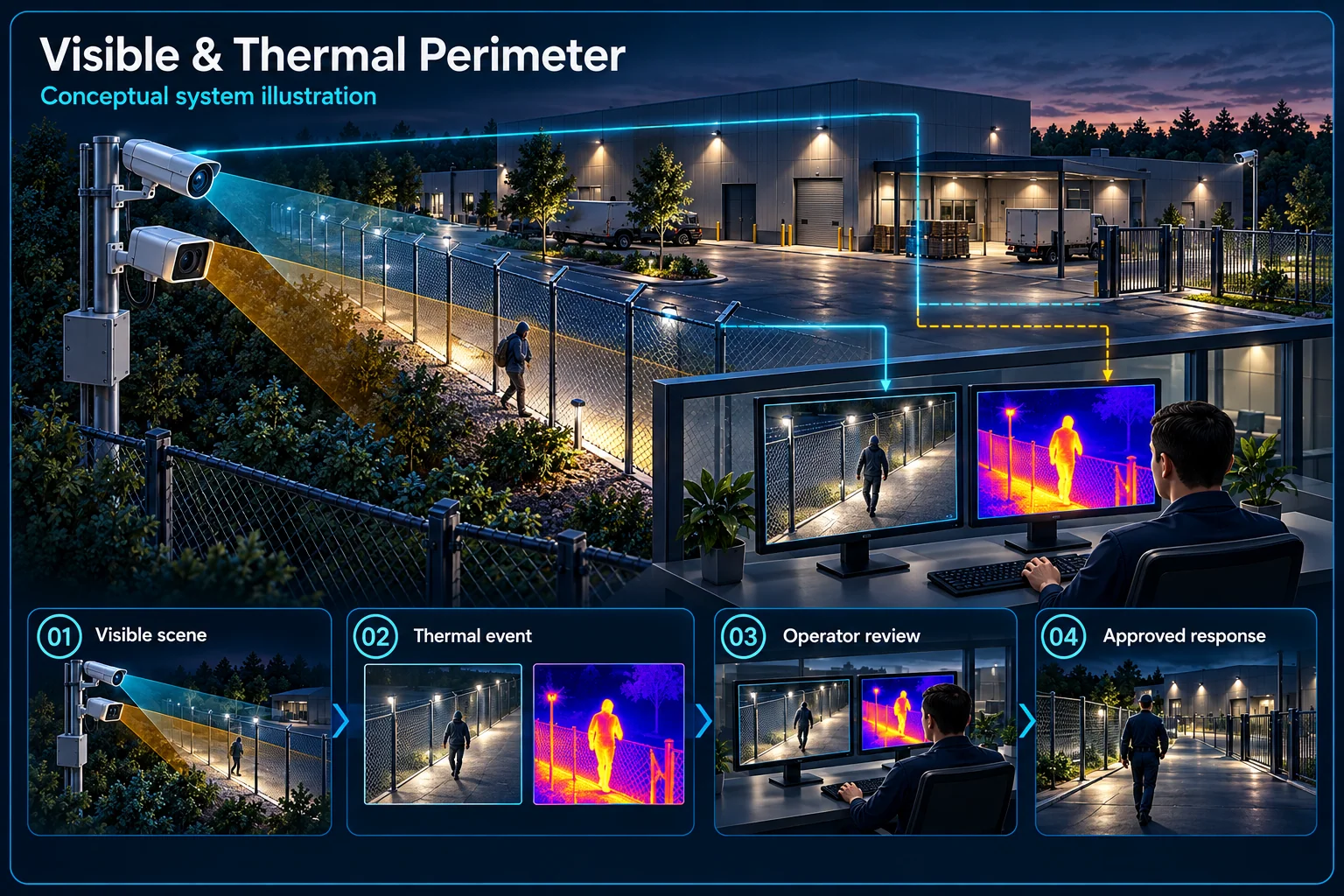
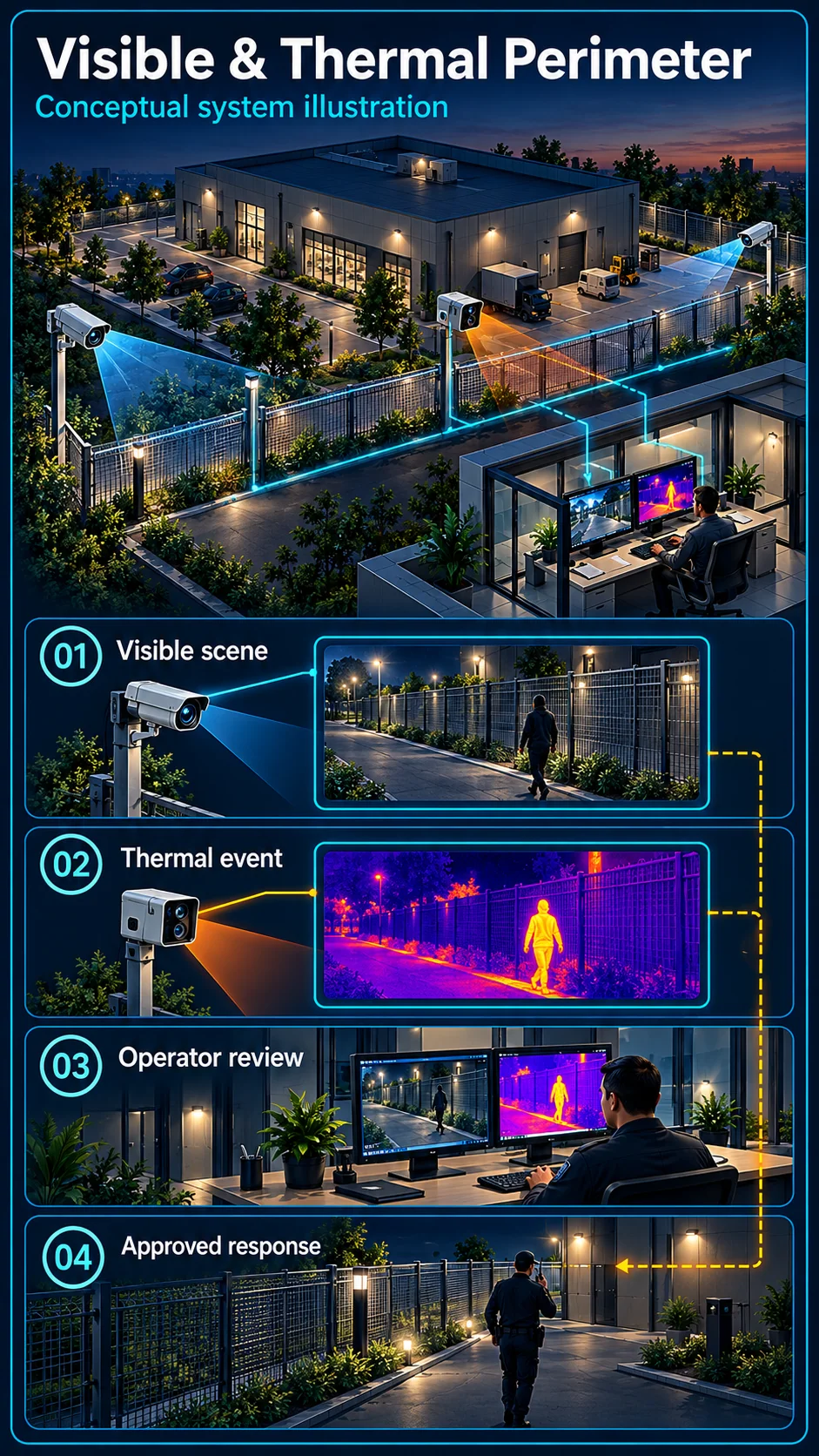
Visible and Thermal Perimeter Video

Visible and thermal sensing can be considered for a specialist perimeter requirement, with each selected path contributing different information to an agreed review workflow. A visible camera, a thermal-capable device and an integrated visible–thermal design are not interchangeable descriptions. The site purpose must establish why both paths are needed.

Visible & Thermal Perimeter Canvas

Thermal & Long-Range CCTV in Kuching & Sarawak – system diagram
Conceptual system illustration. Final configuration depends on the approved site scope.View full-size desktop imageView full-size mobile image
System planning notes

Two sensing paths, one agreed verification workflow

The visible and thermal branches remain separately identifiable; the platform's correlation must be confirmed.

Two sensing paths, one agreed verification workflowThe visible and thermal branches remain separately identifiable; the platform's correlation must be confirmed.E1E2E3E401Selected visible sensor02Selected thermal sensor03Compatible platform04Operator verification05Approved next actionTwo sensing paths, one agreed verification workflowThe visible and thermal branches remain separately identifiable; the platform's correlation must be confirmed.E1E2E3E401Selected visible sensor02Selected thermal sensor03Compatible platform04Operator verification05Approved next action
  • Solid line: illustrated functional path or agreed test route.
  • Dashed line: optional device or compatibility to confirm.
  • The two sensors are distinct paths, not two names for one ordinary camera.
  • The dashed correlation path requires supported platform configuration; no detection distance or temperature function is implied.
Selected visible sensor

Agreed scene and recording task

Selected thermal sensor

Exact perimeter function to verify

Compatible platform

Presentation and correlation to confirm

Operator verification

Review relevant streams and context

Approved next action

Separate response procedure or interface

Read the connections
  1. E1: Selected visible sensor → Compatible platformVisible stream
  2. E2: Selected thermal sensor → Compatible platformSupported thermal stream / event
  3. E3: Compatible platform → Operator verificationConfirmed combined workflow — optional / compatibility to confirm
  4. E4: Operator verification → Approved next actionAgreed response
Conceptual system diagram. Final configuration depends on the approved site scope.

Define the perimeter problem first

Observation and event needs can differ

Identify the area, target, environment and operator's task before selecting a sensor. A broad perimeter event and a usable visual record may need different views. This page does not imply a specific range or identification performance from the word thermal.

Survey lighting, obstacles and access

The actual boundary, vegetation, weather exposure, line of sight and installation access influence suitability. Camera mounting and maintenance should be planned with the property operator. Do not infer site coverage from a generic long-range product image.

Keep the sensing paths visible

The visible-light evidence path

A selected visible camera supports the agreed scene view and recording. Its night illumination and image functions are model-specific. The view should be tested for its actual purpose rather than presented as a universal identification channel.

The selected thermal path

Thermal sensing requires suitable equipment and an appropriately defined task. Exact detection functions and environmental conditions need verification. Do not turn a perimeter-security proposal into an unapproved temperature-measurement, fire-detection or personnel-identification claim.

Thermal-ready is not completed fusion

Reserved infrastructure is a planning state

A thermal-ready design may reserve infrastructure for future equipment. It does not mean a thermal sensor is supplied or producing events. The installed equipment list should distinguish a future provision from a working sensing path.

Coordination needs a supported platform

When both sensing paths are included, confirm how the actual platform presents and correlates them. Automated alarm or access actions need separate compatible interfaces. The proposed visible–thermal architecture is not an automatic feature of Pro or Plus.

Test the agreed task at the actual site

Use representative routes and conditions

Verify the chosen event and scene purpose under the agreed day and night conditions. Review nuisance activity and missed targets as well as successful demonstrations. Record the tested settings and limits without extrapolating them to every season or boundary.

Hand over verification and maintenance roles

Explain which stream or event the operator should review, what action follows and who maintains each part. Check the recording and any approved integration. A specialist sensor still requires a usable response procedure and suitable ongoing access.

Questions about Visible and Thermal Perimeter Video

Does thermal-ready mean a thermal camera is included?

No. Future provision and installed thermal equipment are different scopes. The approved equipment list and commissioning record should make the status clear.

Is visible–thermal a Plus feature?

Not by the name. It is a specialist sensing architecture. Actual cameras, platform functions and integration need their own selection and validation.

Can a generic diagram prove the detection distance?

No. The exact equipment, target, environment, mounting and acceptance task must establish performance. This diagram explains roles, not measured site coverage.

Continue your planning

What Thermal & Long-Range CCTV covers

Assess thermal or long-range cameras for a defined perimeter detection and verification task. HJ checks the required target, lens, field of view and environmental conditions, using visible-camera context where needed; thermal detection alone does not identify a person or prove accurate temperature measurement.

It sits in CCTV / Video Surveillance under Special CCTV. The final deliverable is shaped by the intended outcome, the installed or proposed environment and the interfaces that must be owned, supplied, integrated and tested.

When to use this page

Boundary distances, target type and size, terrain and obstructions, environmental variation, visible verification, supported analytics and any separately authorised temperature-measurement purpose.
Typical environments to assess

  • Industrial perimeters needing assessed long-range awareness
  • Remote boundaries with a visible verification route
  • Large yards with defined targets and environmental constraints

Engineering SOP & Handover Checklist

From the initial brief to the handover record: what to prepare, check and confirm with HJ.

01

Operational Purpose & Workflow

Assess thermal or long-range cameras for a defined perimeter detection and verification task. HJ checks the required target, lens, field of view and environmental conditions, using visible-camera context where needed; thermal detection alone does not identify a person or prove accurate temperature measurement.

02

Pre-Attendance Evidence

Boundary distances, target type and size, terrain and obstructions, environmental variation, visible verification, supported analytics and any separately authorised temperature-measurement purpose.
03

Diagnostic & Testing Path

Define whether the task is perimeter detection, visible verification or separately authorised radiometric measurement. Confirm supported optics, analytics and platform events without assuming every thermal model supplies all three.

04

System & Responsibility Boundary

Target size, lens, obstructions and environmental contrast affect detection. Thermal video alone does not establish identity; temperature measurement needs an appropriate model and controlled task-specific setup.

05

Acceptance & Handover Record

Record target and scene conditions, lens and zones, representative detection and visible verification tests, and the operator response. Describe limitations instead of advertising an unverified range or measurement accuracy.

Engineering Scope, Regulatory & Service Boundaries

Responsibility and evidence boundary

HJ coordinates assessment, engineering, installation, integration, testing and lifecycle support only for the scope recorded in the quotation. ISD handles catalogue, model, datasheet, supply and availability enquiries. Customer, consultant, builder and appointed-specialist responsibilities remain explicit.

Identity, image, credential and movement data require an authorised controller, lawful access, proportionate collection, retention rules and recorded administrator responsibility.

This focused topic remains connected to its complete system owner. Final models, quantities, interfaces and included work are confirmed in the assessed quotation.

Questions before proceeding

Use the answers as a planning boundary; site conditions and written scope remain decisive.

Is every thermal camera a temperature-measuring camera?

No. Detection and radiometric measurement are different functions. Measurement requires an appropriate model and controlled configuration for the task. This perimeter page does not promise medical screening, personal identification or a universal detection range.

Can a advertised range be assumed for this site?

No. Detection, recognition and identification are different tasks. The required target size, optics, scene and environmental conditions must be checked for the selected equipment, with representative acceptance tests and limits recorded.

What should I send HJ for Thermal & Long-Range CCTV?

Boundary distances, target type and size, terrain and obstructions, environmental variation, visible verification, supported analytics and any separately authorised temperature-measurement purpose. Share authorised equipment and scene information; do not send passwords or personal footage through a public form.
Planning Thermal & Long-Range CCTV? Tell HJ about your site

Tell us where it will be used, what it needs to do and what equipment you already have. HJ will recommend the right system, explain who is responsible for what, and agree the next step with you.