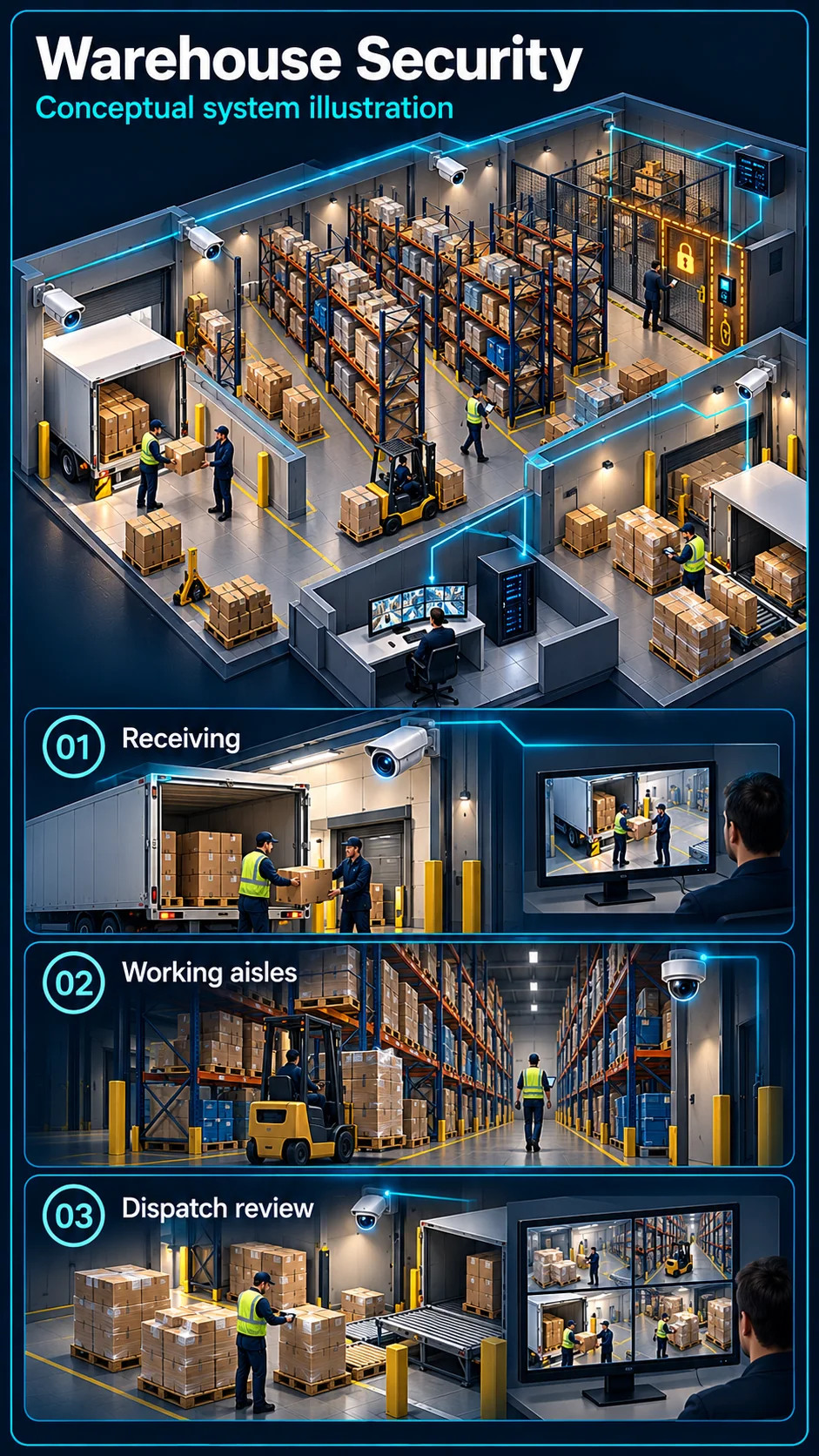
Racks, staging and loading lanes
Check useful views with realistic stock, vehicles and lighting. Match recording and review needs to the operation; an event or a stock discrepancy is not automatically proof of theft.
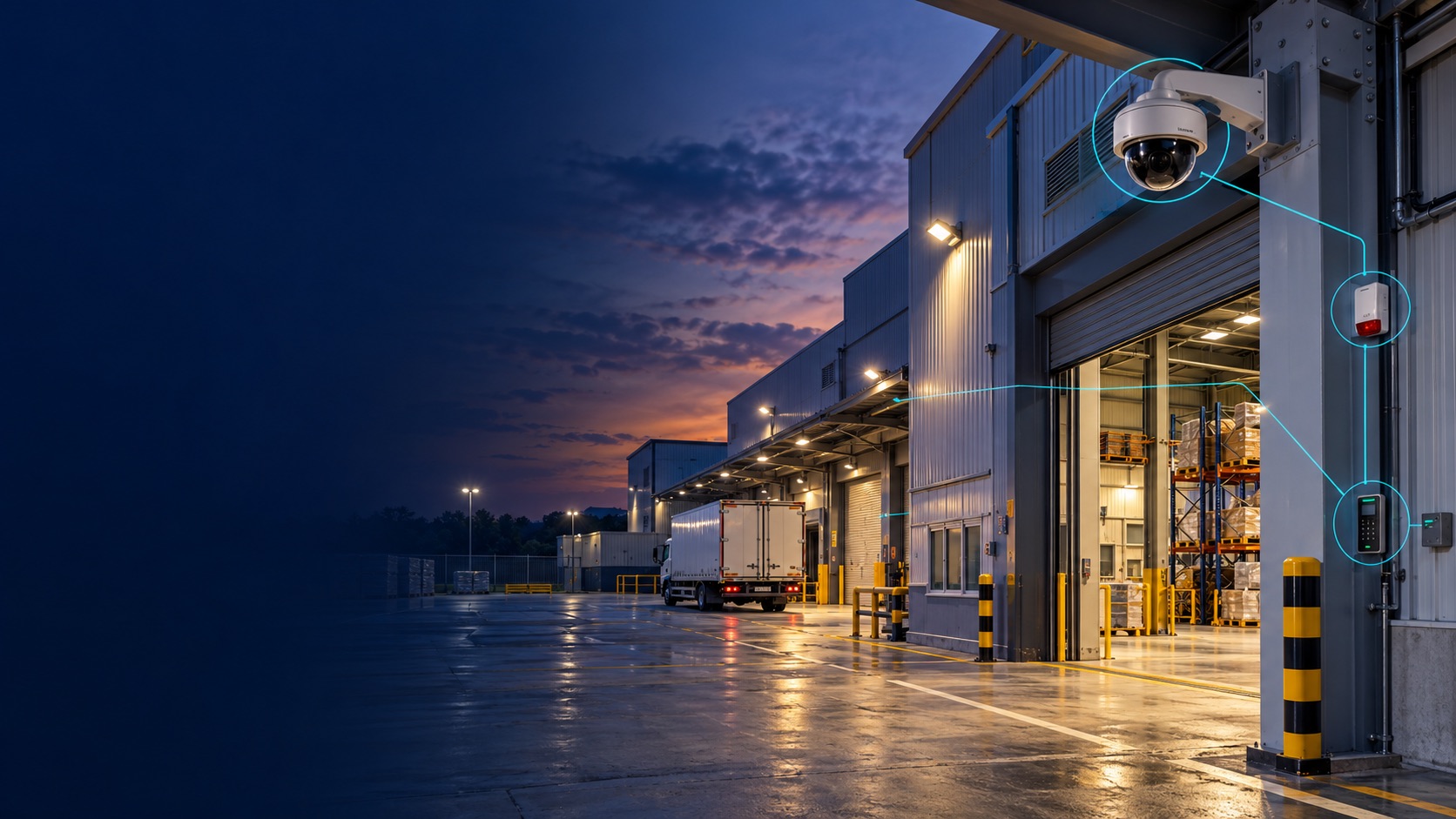
In a warehouse, security is inventory accuracy. Shrinkage, loading bay disputes, lorries in and out all day — the systems exist to make every movement of goods and vehicles provable.
Industry solution
A warehouse view is useful only when it works with actual racks, pallets, vehicles and lighting. Plan evidence around receipt, storage and dispatch rather than assuming an empty-building survey proves operating coverage.
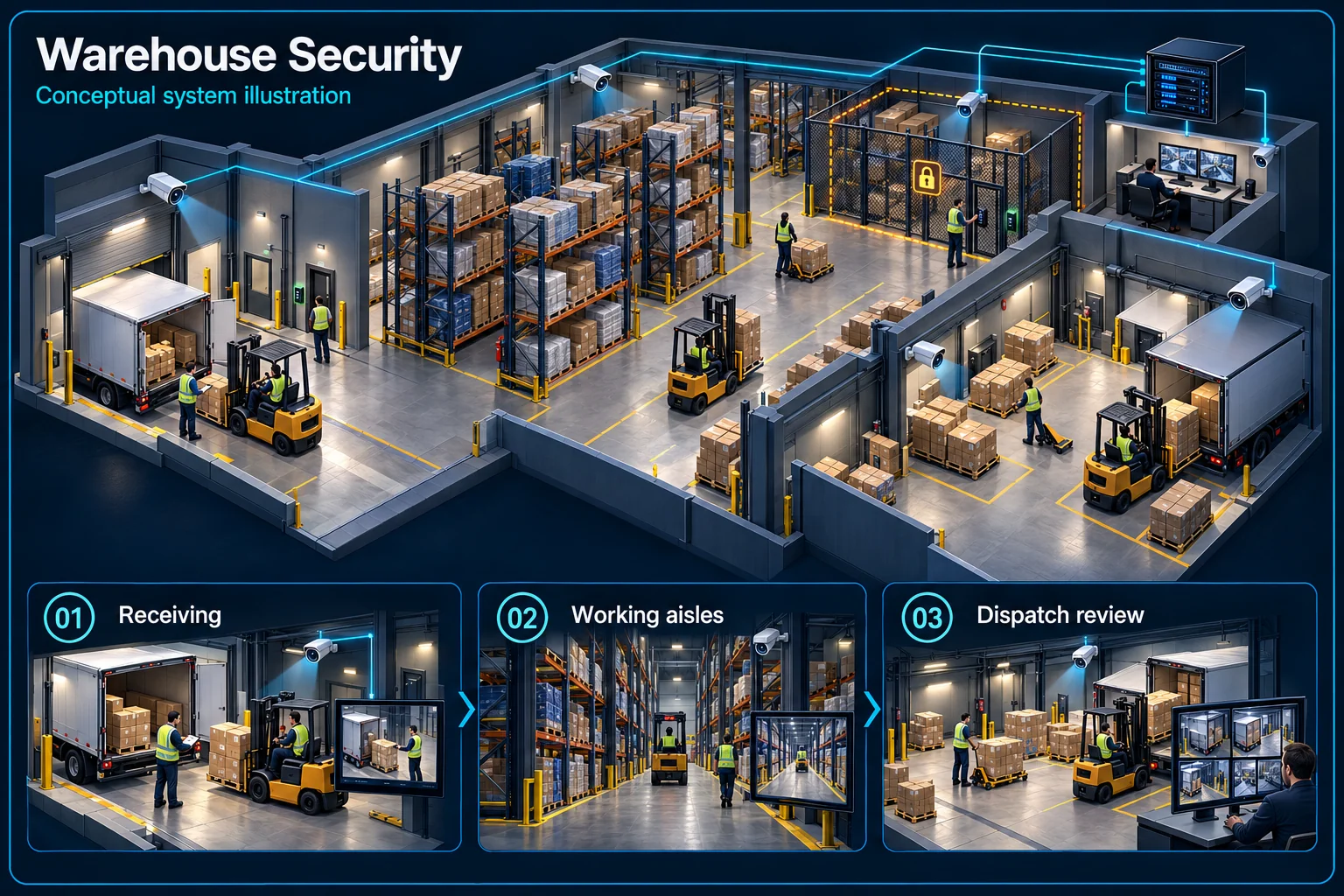
Loading, rack aisles and a controlled store have different evidence questions.
Goods handover
Realistic obstructions
Separate permission
Retrieval context
Identify where goods change custody and what an operator needs to see later. Confirm views during the real loading process, including the vehicles and equipment that can obscure an event.
Use actual shelf heights and typical stock conditions when choosing views. Separate normal picking activity from a restricted-zone rule and record who may change that rule.
Ask how long it normally takes to discover a discrepancy. Agree the recording schedule and retrieval process without promising fixed storage days from camera count alone.
A new rack, relocated loading station or changed night shift can alter the useful view. Identify when the operator should request a coverage and event-rule review.
No. Stock and handling equipment can obstruct a view. Acceptance should include the working aisles and realistic loading conditions.
It provides recorded context where the agreed views and retention are available. Inventory and custody records may still be needed to understand the event.
CCTV scene planning · Warehouse & logistics
A warehouse CCTV plan in Kuching should follow picking, staging, loading and yard movement rather than rely on an empty-floor view.
Check useful views with realistic stock, vehicles and lighting. Match recording and review needs to the operation; an event or a stock discrepancy is not automatically proof of theft.
Agree arrival, loading and night-working routines. Define which areas are still active and who can change any warning mode without disabling unrelated areas.
Agree access to clips, entry records and the escalation contact. Plan works around live docks and aisles, document temporary gaps, and test the final routes and views before handover.
No. Useful views and retained recordings can support an investigation, but conclusions also depend on operational records and what the scene actually captured.
Where practical, verify the agreed views and network use under representative operating conditions. Racking, stock and vehicles can change both sight lines and wireless performance.
The assessed scope, selected equipment and agreed acceptance test determine the final configuration.
Driver says 40 cartons loaded, customer says 38 arrived — without bay footage, the loss is yours by default.
Stock counts that never match the system, and no way to tell theft from process error without coverage of picking and staging.
Vehicles entering, waiting and leaving with the only record being a guard's memory of a busy afternoon.
Electronics, pharma or spirits stored behind a padlock that half the floor has seen opened.
Deep racking aisles where handheld scanners lose WiFi — and workers improvise off-system, corrupting inventory data.
A big empty box full of goods, protected after 6pm by nothing but a chain on the gate.
The warehouse package is built around one principle: goods movement, vehicle movement and people movement each leave a record that can be cross-checked when numbers don't match.
A customer claims two cartons short on yesterday's delivery. Bay camera footage shows the full load count onto the lorry; LPR confirms the vehicle, departure time and no unscheduled stops on your premises; the picker's scan records match. You respond with a timeline and footage instead of absorbing the credit note. Multiply that by a year of deliveries — the system pays for itself in disputes you stop losing.
Cameras and WiFi both fight the same enemy — racking steel and height. Placement is engineered from your racking plan, not guessed from the floor.
Dispute cycles run weeks, not days — recording retention is sized so footage still exists when the claim letter arrives.
Running third-party logistics? Zoned access and coverage lets you offer clients verifiable security for their stock as a service differentiator.
A supported entry-and-exit workflow may provide vehicle dwell records. Confirm camera views, plate-reading conditions, the selected software and matching rules, then test representative journeys; the result is not assumed for every vehicle.
Agree low-activity windows and work by zone where practical. The plan should identify any temporary dock, aisle or system restrictions and the checks required before each area returns to use.
Send us your warehouse size and racking layout — we'll design coverage around it.
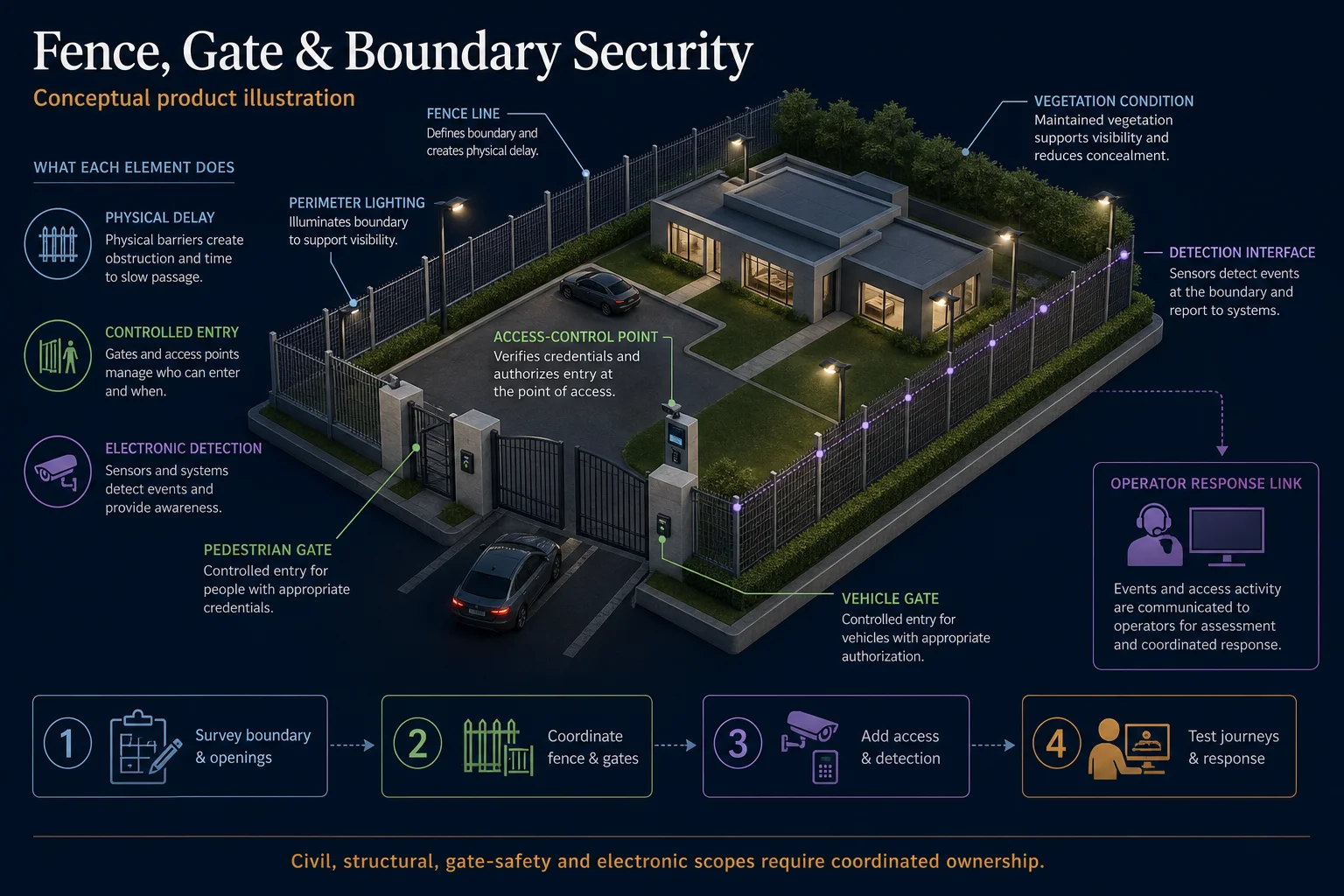
An industry outcome may combine several systems. Use these diagrams to understand each system boundary, then confirm the functions and quantities required for the actual site.

Connects camera capture, transmission, recording, retention, authorised viewing and selected response functions as one commissioned CCTV system.
Planning connection: Review loading, goods-handling and agreed access views against rack height, lighting and vehicle movement. Confirm camera positions and authorised recording on site; the diagram is not a verified inventory or damage record.
Open component 01 in the complete Solution →
Connects vehicle identification, lane control, safety detection, release rules and parking operations as one entrance workflow.
Planning connection: Plan the warehouse entrance around authorised vehicles, visitors and deliveries. Confirm lane use, release rules and safety detection without assuming that a barrier alone manages the whole logistics workflow.
Open component 03 in the complete Solution →
Defines the shared infrastructure and separate service boundaries for network, WiFi, SIP telephony and TV media distribution.
Planning connection: Check coverage and user capacity along working aisles and agreed loading areas, together with the wired backbone. Racks, obstructions and moving operations require site assessment; the diagram does not guarantee uninterrupted roaming.
Open component 04 in the complete Solution →