System feature
CCTV AI Channels: Separate Inputs, Analysis & Event Delivery
A recorder's input capacity does not, by itself, state how many channels can run a particular AI event. HJ separates camera-side analysis, recorder-side processing, recording capacity and delivery of events to another system. Each approved function needs its own device and operating-mode evidence.
How this feature fits together
AI Processing & Capacity Canvas
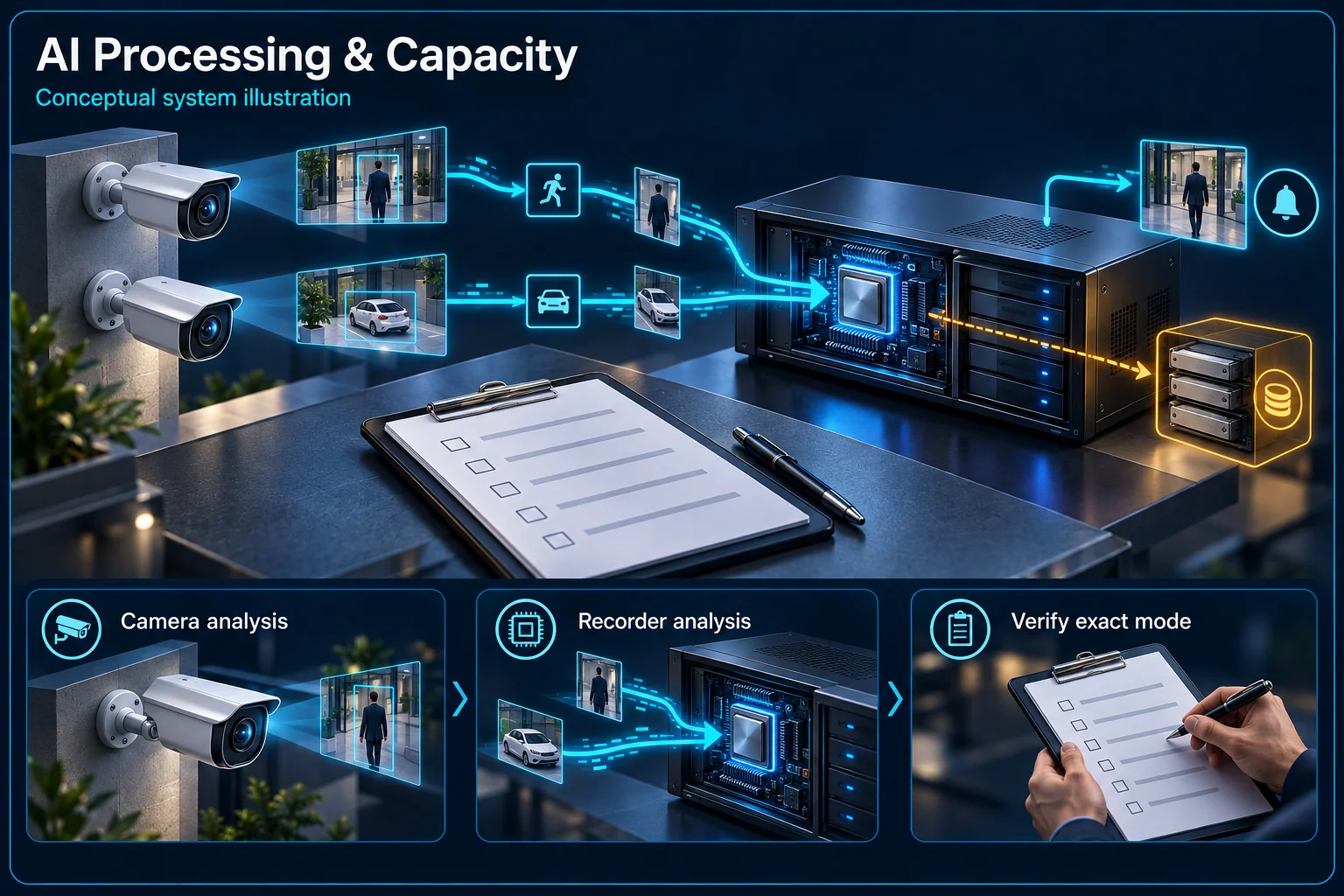
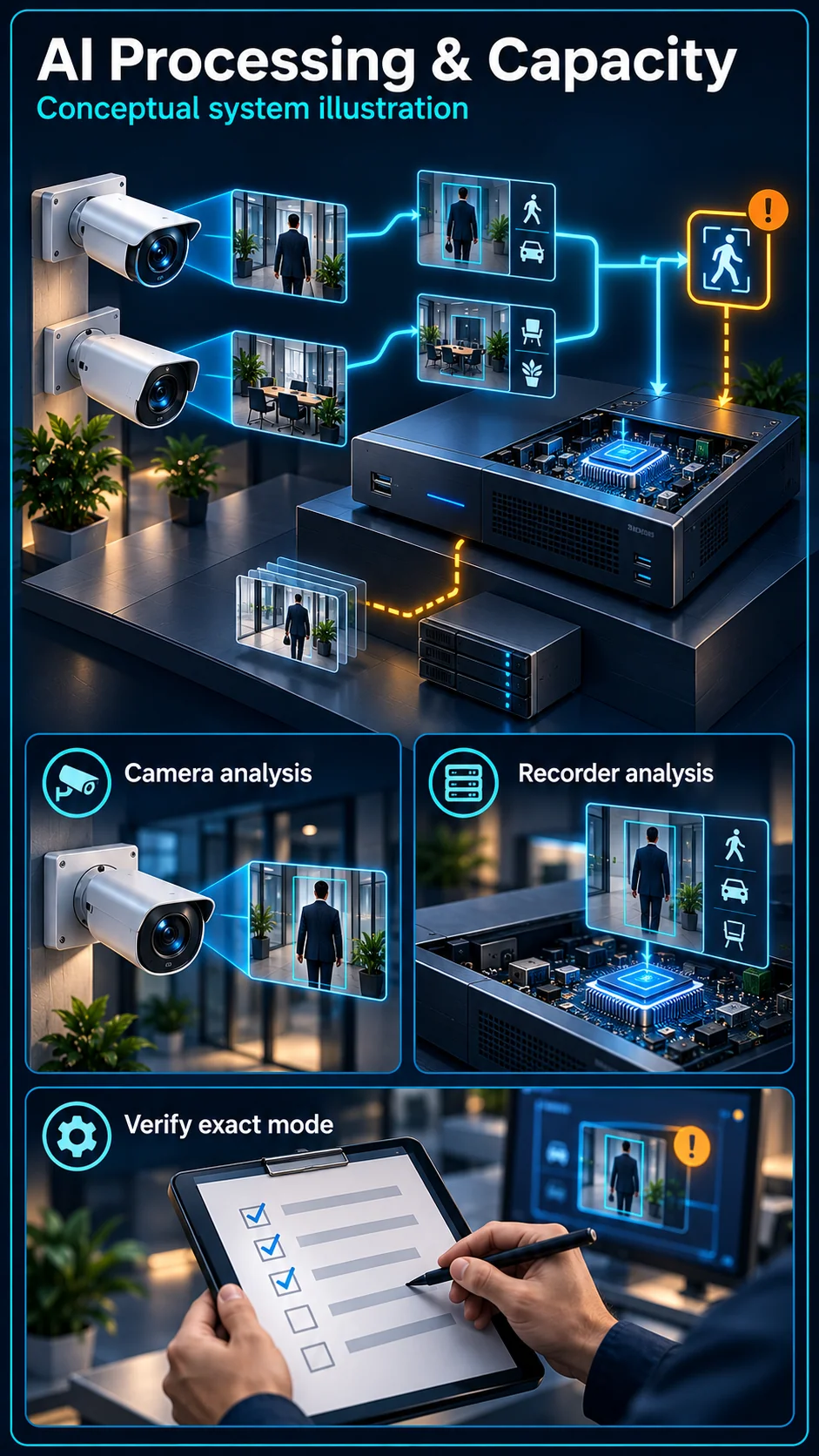
System planning notes
Four capacities that must not become one AI tick
A functional confirmation record identifies the processing location, exact event and operating conditions. Unknown capacity remains pending.
- Solid line: illustrated functional path or agreed test route.
- Dashed line: optional device or compatibility to confirm.
- No all-input AI count or performance multiplier is inferred from Pro or Plus names.
- Device, function, firmware, active channels and concurrent modes each require evidence.
Connection and recording architecture
Exact supported camera function
Exact function, firmware and mode
What the receiver can accept and use
Clips, events and chosen outputs
- E1: Video input capacity → Recorder-side analysisAnalysis is a separate allowance — optional / compatibility to confirm
- E2: Camera-side event → Event deliveryCamera-produced event
- E3: Recorder-side analysis → Event deliveryRecorder-produced event
- E4: Event delivery → Combined-mode testVerify the selected workflow
Count the right resource
Video inputs describe a recording architecture
The number of supported video inputs helps define how cameras can be connected and recorded under the selected configuration. It is not a universal allowance for human classification, line crossing, intrusion or every other analytic function running at once.
Each analytic task needs its own entry
List the actual requirement: target filtering, a particular perimeter rule or another supported event. Record which views need it and whether other functions must coexist. Combining these needs into one AI tick obscures important differences between devices and modes.
Distinguish where the work happens
A camera can analyse before an event reaches the recorder
Where supported, a camera may generate an event using its own analysis. The receiving recorder may display or store that event without performing the same analysis itself. Check both the event produced and how the rest of the system can use it.
Recorder-side analysis has a different budget
A compatible recorder may analyse incoming images using a particular function and mode. Confirm the exact model, firmware, available processing allowance and any coexistence conditions. A different input count, suffix or hardware family is not sufficient evidence to copy another recorder's analytics specification.
Keep HJ family names and upgrades accurate
Pro and non-Pro are the comparison requested
Pro denotes HJ's IP camera, NVR and PoE family. It is not another word for Plus, nor a claim that every input has all analytic functions. A fair comparison identifies the same required event, processing location and supported operating conditions on each side.
Plus remains a specified configuration upgrade
A Plus proposal needs its actual processing equipment, requested function and response-device scope. Numeric channel improvements need exact configuration evidence before being treated as supported. Channel counts do not establish a percentage improvement in accuracy, stability or false-alarm performance.
Record evidence and test the combined mode
Use a function-by-function confirmation record
For each requested event, record the camera, recorder, firmware, analysis location, enabled channels and other simultaneous functions. Mark an unknown as pending rather than giving it a green check. Keep this record aligned with the approved equipment selection and actual site scope.
Demonstrate events while the system records
Test the agreed views in the intended operating mode, including event reception, recorded clips and selected outputs. If an alarm receives events, verify that separate delivery path. A successful single-camera demonstration does not prove every requested channel or combined function.
Questions about CCTV AI Processing & Channel Capacity
Does a 16-channel recorder provide 16 channels of every AI feature?
Not automatically. Input capacity and the allowance for a specific analytic function are different specifications. Check the exact device, function and operating mode.
Can camera-side AI count as recorder-side analysis?
They are different processing locations. The camera may send an event that the recorder receives, while the recorder's own analysis budget remains a separate specification.
Are the requested Pro channel upgrades already verified?
No blanket channel claim is made here. The exact event, devices, firmware and simultaneous operating conditions still need configuration-specific evidence and acceptance testing.