Installation package
Proactive Defence Plus CCTV and Alarm Upgrade Planning
Proactive Defence Plus brings a specified processing and event-function upgrade into a Defence plan with independent alarm control. It is intended for an agreed multi-layer response, not just a louder camera. The design must state what generates the event, what controls arming and what device actually produces each output.
How this package fits together
Proactive Defence Plus Canvas
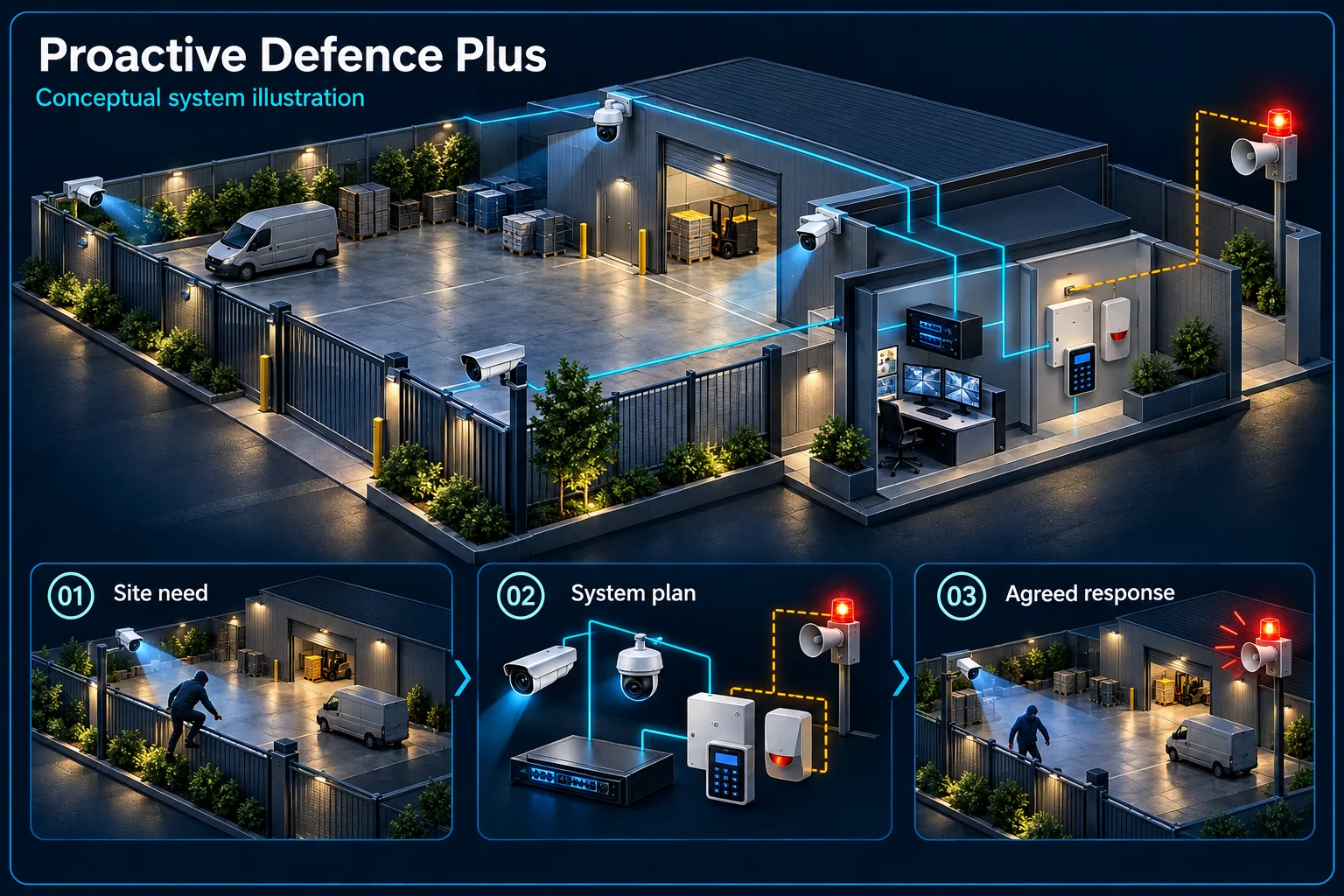
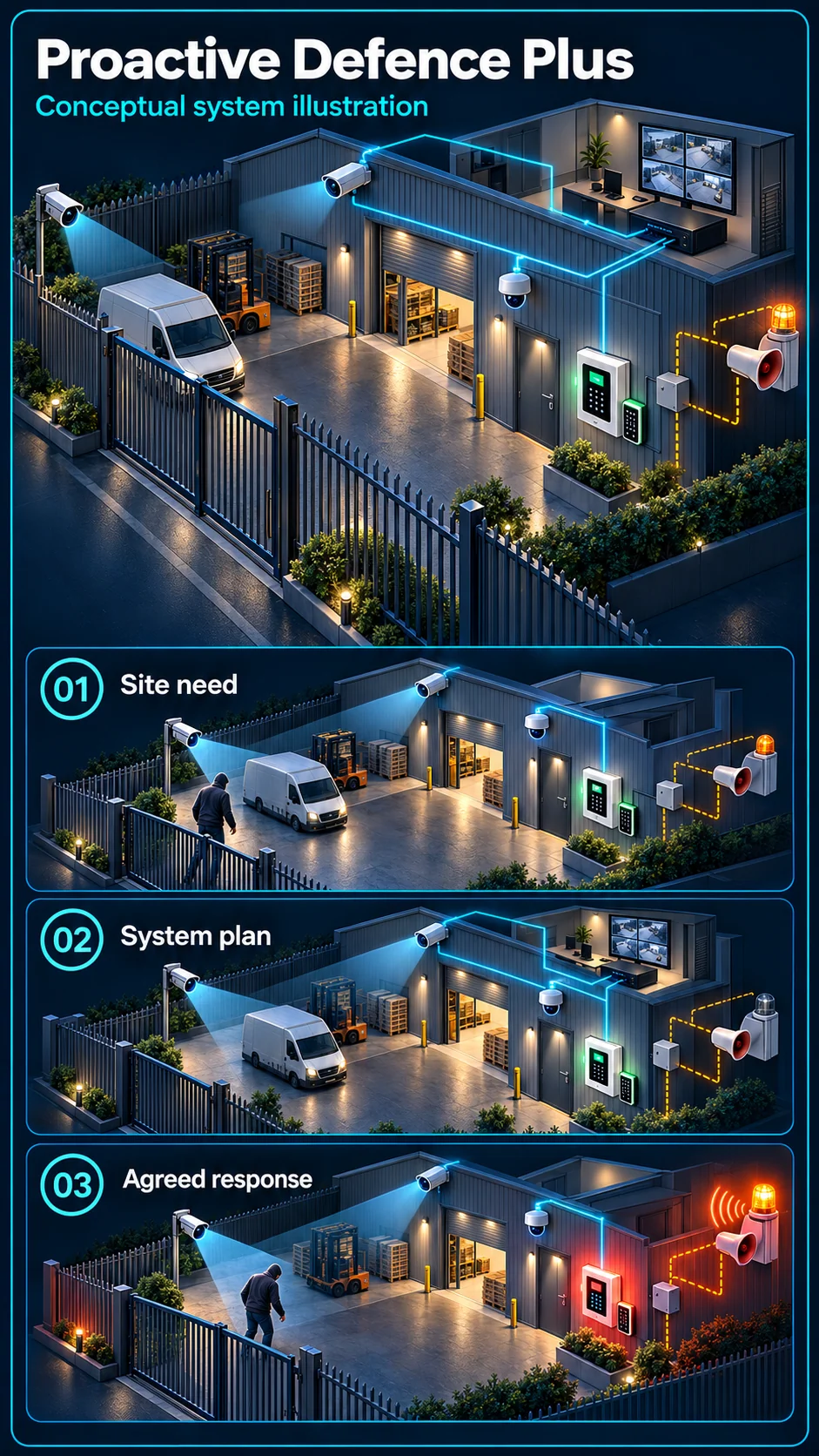
System planning notes
Specify processing, arming and independent outputs
A Plus upgrade and a Defence alarm layer meet through an explicitly confirmed event path.
- Solid line: illustrated functional path or agreed test route.
- Dashed line: optional device or compatibility to confirm.
- The independent siren is not the camera's speaker or warning light.
- Dashed paths are conditional compatibility or separately requested equipment, not verified installed scope.
Camera / recorder and actual function
Protected area and permitted activity
Linkage configuration to confirm
Independent arming control
Agreed panel response
Own approved interface and power
- E1: Specified event processing → Schedule and target ruleSupported event
- E2: Schedule and target rule → Compatible interfaceCompatibility review — optional / compatibility to confirm
- E3: Compatible interface → Panel and keypadConfigured event transfer — optional / compatibility to confirm
- E4: Panel and keypad → Separate alarm sirenArmed-state response
- E5: Panel and keypad → Optional horn / extra strobeOptional output design — optional / compatibility to confirm
Keep the Defence alarm scope clear
Panel, keypad and independent siren
The corresponding Defence reference includes the independent controller, keypad and separate siren scope. The installation list must still identify equipment, detector requirements and any exclusions. A hardware bundle does not demonstrate an accepted operating workflow.
Camera warning is a separate output
The selected camera may provide its own audio and warning-light response. Decide whether that operates before, alongside or independently from the panel output. The customer should understand which controls change each layer.
Define what Plus changes
Name the processing location and event
Specify the needed target and event behaviour, then confirm the camera-side or recorder-side processing. Input capacity, individual analytics functions and alarm-event transfer are different limits. A single all-channel AI label would hide those distinctions.
Approve a compatible integration route
The exact interface and armed-state logic must connect the selected event to the alarm response. This could involve changes to equipment or configuration, but the Plus name does not determine a universal bill of materials or prove brand interoperability.
Plan external response without assumptions
Air Horn and additional strobe are options
If an external warning device is useful, assess its intended coverage and impact on nearby occupants. Trigger compatibility, suitable power and mounting are separate design items. Do not assume a camera or panel can directly power any requested device.
Electric fencing is another system
Electric fencing is a separate perimeter system with its own safety and operating requirements. It needs an approved design and installation scope. Use the combined Defence Plus with Electric Fence topic when that separate protection layer is being considered.
Commission the full response sequence
Test enabled and permitted modes
Demonstrate the chosen event with the alarm armed and disarmed, including expected authorised access. Check day and night conditions. A test must verify the intended response and also show how ordinary permitted activity is handled.
Record evidence, output and reset
Verify recording, event receipt, camera warning, independent siren and configured notifications as separate outcomes. Show acknowledgement and reset, and record who may adjust rules. Improvement claims require actual evidence, not a percentage inferred from an equipment upgrade.
Questions about Proactive Defence Plus
Is Defence Plus the same as Defence Pro?
No. Pro identifies the IP/NVR/PoE family. Plus describes a specified upgrade direction. Their names do not establish the same equipment, processing capacity or integration scope.
Are an Air Horn and extra strobe automatically supplied?
No. They are optional equipment requests. Compatibility, supply, mounting, quantities and commissioning must be included in an approved scope before installation.
Can I ask for a defined after-hours response?
Yes. Describe the restricted area, allowed access and response contact. HJ can then assess supported events, schedules and the alarm-control route instead of enabling indiscriminate warning.